Portage Park

Why it's listed
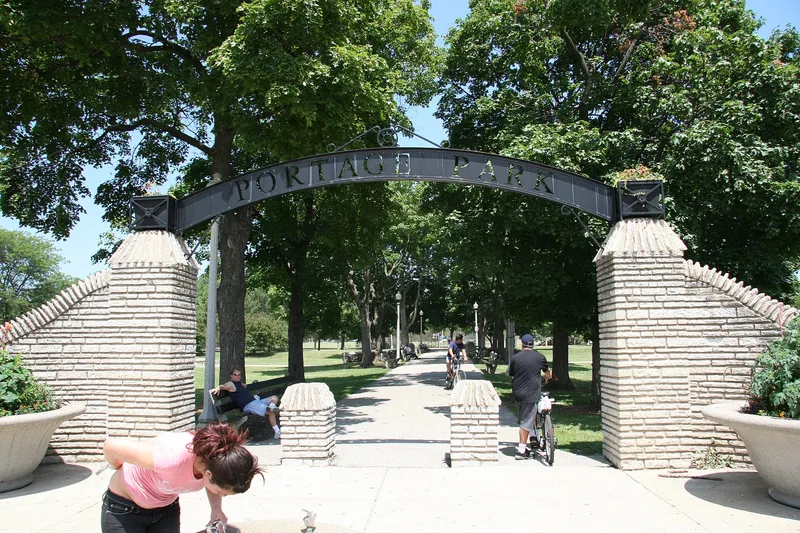
Portage Park is a 36.52-acre neighborhood park on Chicago's northwest side, created after residents of a fast-growing, working- to middle-class area lobbied for it. The Old Portage Park District acquired the land in 1913, and American Park Builders, a firm founded by landscape architect Myron H. West, drew the 1912 plan with tree-lined allees, sunken lawns, a central athletic field and a lagoon. Architect Clarence Hatzfeld designed the 1922 Prairie School fieldhouse and the 1928 gymnasium, both of brick with limestone trim and green tile roofs. In 1936 Works Progress Administration crews added limestone entry gates, display fountains and a pergola. Although some plantings and features have been lost or altered, the original paths, buildings, gateways and fountain basins remain. The district counts thirteen contributing resources, and the park continues to serve recreation needs much as its planners intended.
Machine-generated summary. This summary was generated by a language model from the official nomination document and has not been reviewed line by line by an editor. It may contain errors. Check the source document before relying on any detail. Source: nomination document (PDF) · catalog entry. Generated October 2026 (model claude-sonnet-5-5, prompt v1.0-2026-10-29).
| Styles | Late 19th and Early 20th Century American Movements/Prairie School |
|---|---|
| Areas of significance | Social History, Entertainment/Recreation, Landscape Architecture, Architecture |
| Acreage | 36.5 |
| Boundary source | NPS cultural-resource GIS polygon |
| Full listing page | Portage Park (property record) |
What listing means for this property
This is a historic district. Buildings within its boundary are either contributing (they add to the district's significance) or non-contributing. Owners of contributing income-producing buildings can claim the 20% federal rehabilitation tax credit; homeowners should look at state credits. National Register districts impose no design review by themselves; a local historic district ordinance, if one exists, does (the difference explained).
General information, not legal or tax advice. Rules change; confirm with your State Historic Preservation Office or a qualified adviser.