Pilsen Historic District

Why it's listed
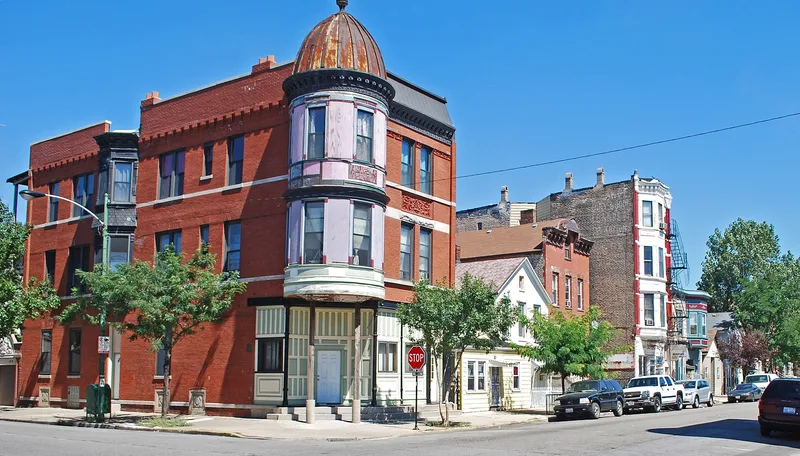
Pilsen is a densely built Chicago neighborhood about two and a half miles southwest of downtown, laid out on the city's flat street grid. Investors platted many streets in the 1850s, but construction took off after the Great Chicago Fire of 1871, as Bohemian immigrants moved in. Most surviving buildings date from the 1880s and 1890s. The district counts 4,405 contributing and 838 noncontributing buildings, including brick cottages, rear houses, two- and three-flats, tenements, mixed-use corner buildings, banks, churches, schools, meeting halls and factories. Many show Baroque forms and ornament carried from Europe, such as sculptural gables, carved stone lintels and patterned brickwork. West 18th Street forms the commercial spine. Churches such as St. Procopius and St. Paul are prominent landmarks. Parks including Harrison, Dvorak and Barrett, along with two public baths, reflect Progressive-era efforts to serve a crowded immigrant community. Together these features give Pilsen an architectural and urban character unusual among Chicago neighborhoods.
Machine-generated summary. This summary was generated by a language model from the official nomination document and has not been reviewed line by line by an editor. It may contain errors. Check the source document before relying on any detail. Source: nomination document (PDF) · catalog entry. Generated October 2026 (model claude-sonnet-5-5, prompt v1.0-2026-10-29).
| Styles | Late 19th and 20th Century Revivals; Late 19th and Early 20th Century American Movements; Craftsman; Other: Bohemian Baroque |
|---|---|
| Areas of significance | European, Hispanic, Social History, Industry, Architecture |
| Acreage | 704 |
| Boundary source | NPS cultural-resource GIS polygon |
| Full listing page | Pilsen Historic District (property record) |
What listing means for this property
This is a historic district. Buildings within its boundary are either contributing (they add to the district's significance) or non-contributing. Owners of contributing income-producing buildings can claim the 20% federal rehabilitation tax credit; homeowners should look at state credits. National Register districts impose no design review by themselves; a local historic district ordinance, if one exists, does (the difference explained).
General information, not legal or tax advice. Rules change; confirm with your State Historic Preservation Office or a qualified adviser.