Peoria Lock and Dam Historic District
Why it's listed
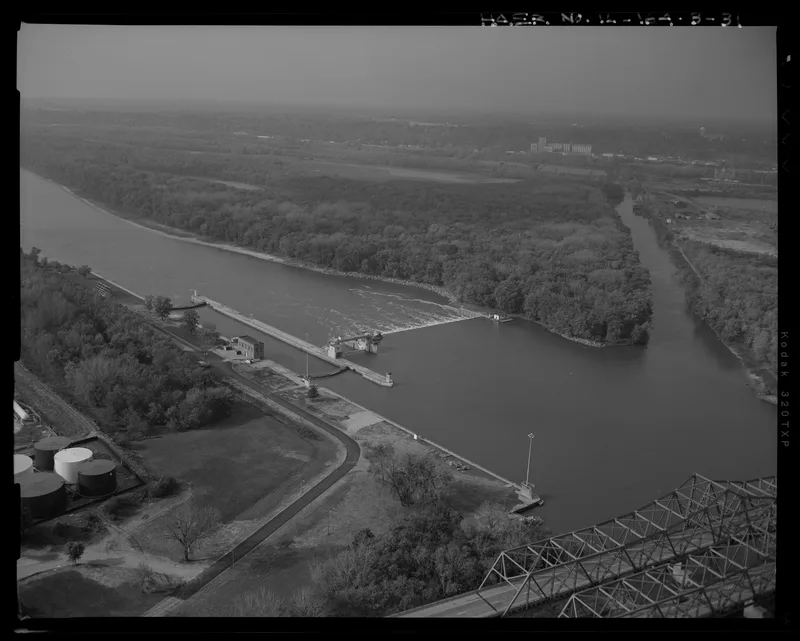
Peoria Lock and Dam, also called Lock and Dam 7, sits on the Illinois River at Creve Coeur, Illinois. Built in 1938 and 1939, it was part of a chain of slackwater facilities that let commercial barges and towboats travel the 336 miles of the Illinois Waterway between Chicago and the Mississippi River. The district has four contributing resources: an 11-foot-lift lock with a 110-by-600-foot chamber, a 536-foot concrete pier dam, Maneuver Boat No. 2, and a two-story brick control station designed by Paul LeGromwell. The dam is one of only two on the waterway that still use wicket gates, and the maneuver boat that raises and lowers them may be one of only four of its kind remaining in the country. The facility is considered significant for its part in regional transportation and industrial growth and as a representative Army Corps of Engineers design. Later changes, including a 1986 Tainter gate, have not removed its historic character.
Machine-generated summary. This summary was generated by a language model from the official nomination document and has not been reviewed line by line by an editor. It may contain errors. Check the source document before relying on any detail. Source: nomination document (PDF) · catalog entry. Generated October 2026 (model claude-sonnet-5-5, prompt v1.0-2026-10-29).
| Period of significance | 1938-1951 |
|---|---|
| Styles | Other: lock and dam; No style: control station |
| Areas of significance | Transportation, Maritime History, Engineering |
| Acreage | 27.3 |
| Boundary source | NPS cultural-resource GIS polygon |
| Full listing page | Peoria Lock and Dam Historic District (property record) |
What listing means for this property
This is a historic district. Buildings within its boundary are either contributing (they add to the district's significance) or non-contributing. Owners of contributing income-producing buildings can claim the 20% federal rehabilitation tax credit; homeowners should look at state credits. National Register districts impose no design review by themselves; a local historic district ordinance, if one exists, does (the difference explained).
General information, not legal or tax advice. Rules change; confirm with your State Historic Preservation Office or a qualified adviser.