Peabody, Francis Stuyvesant, Estate

Why it's listed
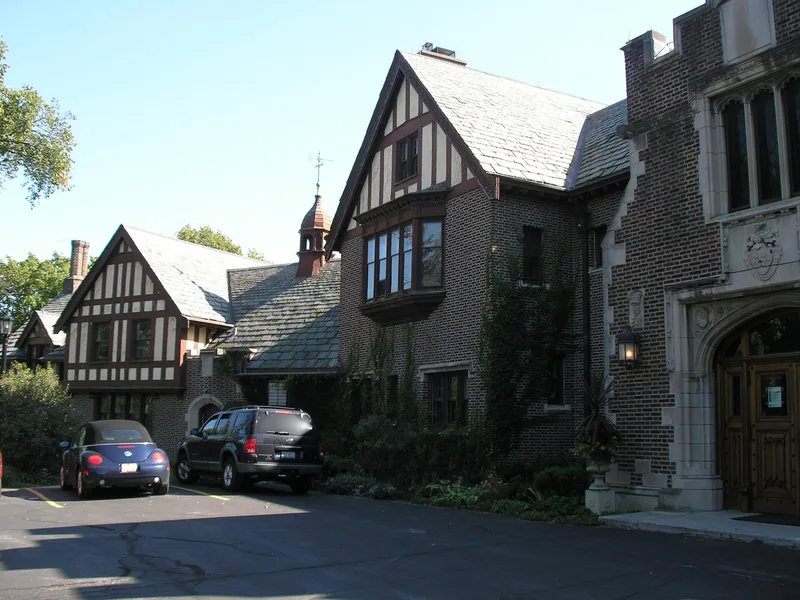
Mayslake is a country estate in Oak Brook, Illinois, built between 1919 and 1921 as a retirement home for Francis Stuyvesant Peabody. Architect Benjamin H. Marshall designed the 39-room Tudor Revival mansion, which has red brick walls, stone trim, stucco, half-timbered gables, a slate roof and tall chimneys with ornamental pots. Inside, carved woodwork, strapwork ceilings, marble floors and stone fireplaces survive largely unchanged. The estate once covered 848 acres meant as a horse farm. After Peabody died in 1922, the Franciscan Order acquired it in 1924 and used it as a retreat center, adding a compatible retreat wing in 1952 and later selling off most of the land. Today about 90 acres remain, including two lakes, oak groves, prairie, wetlands and stone entrance gates. The property was recognized for its architecture and for what it shows about the grand country estates built around Chicago in the early twentieth century.
Machine-generated summary. This summary was generated by a language model from the official nomination document and has not been reviewed line by line by an editor. It may contain errors. Check the source document before relying on any detail. Source: nomination document (PDF) · catalog entry. Generated October 2026 (model claude-sonnet-5-5, prompt v1.0-2026-10-29).
| Styles | Late 19th and 20th Century Revivals: Tudor Revival |
|---|---|
| Areas of significance | Architecture |
| Acreage | 89.4 |
| Boundary source | NPS cultural-resource GIS polygon |
| Full listing page | Peabody, Francis Stuyvesant, Estate (property record) |
What listing means for this property
This is a historic district. Buildings within its boundary are either contributing (they add to the district's significance) or non-contributing. Owners of contributing income-producing buildings can claim the 20% federal rehabilitation tax credit; homeowners should look at state credits. National Register districts impose no design review by themselves; a local historic district ordinance, if one exists, does (the difference explained).
Noted as vacant in the nomination. Nomination documents can be decades old; current status may differ. If you are considering buying an empty listed property, read the due-diligence checklist.
General information, not legal or tax advice. Rules change; confirm with your State Historic Preservation Office or a qualified adviser.