Ouilmette North Historic District

Why it's listed
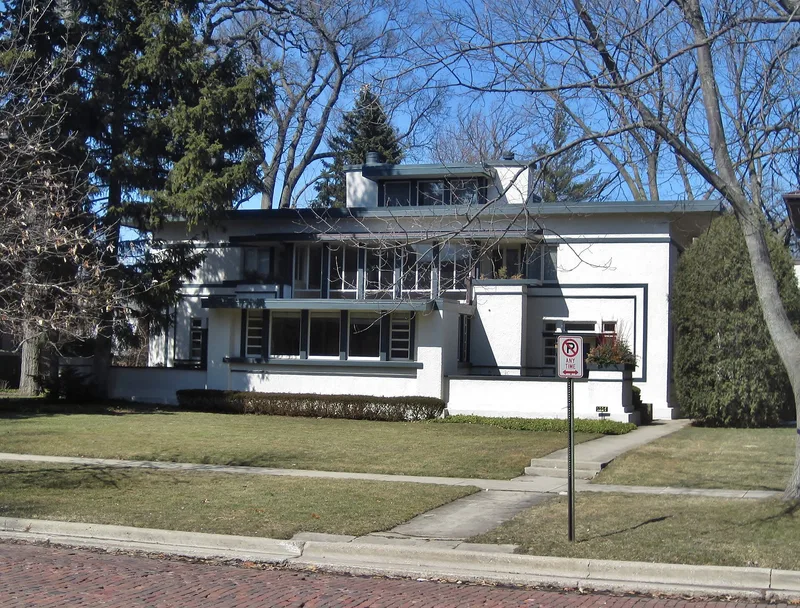
Ouilmette North is a 46-block neighborhood in the northeastern part of the original Village of Wilmette, on Chicago's North Shore. It contains 1190 buildings, of which 911 are counted as contributing, plus a site made up of the streetlamps and brick street paving. Nearly all are private homes, with two churches. Most houses went up between 1900 and 1930, though a few date to the 1870s and some were built by 1945. Roughly one-third show Prairie School features, and architects such as William Drummond, John Van Bergen, George Maher and Dean & Dean designed houses here. Queen Anne, Colonial Revival, Italian Renaissance, French Eclectic and Craftsman homes add variety. What unites the area is a consistent scale of mostly 2-1/2 story houses, uniform 25-foot setbacks, mature trees, alley-accessed garages, brick-paved streets and original 1925 electric streetlamps. The land came from the Ouilmette Reservation and early subdivisions such as Gage's Addition, shaping the district's layout.
Machine-generated summary. This summary was generated by a language model from the official nomination document and has not been reviewed line by line by an editor. It may contain errors. Check the source document before relying on any detail. Source: nomination document (PDF) · catalog entry. Generated October 2026 (model claude-sonnet-5-5, prompt v1.0-2026-10-29).
| Period of significance | Through 1945 (closing date stated; start date not shown in the provided text) |
|---|---|
| Styles | Late Victorian: Queen Anne; Late 19th and 20th Century Revivals (Greek Revival, Tudor Revival, Spanish Colonial Revival, Italian Renaissance); Prairie School |
| Areas of significance | Architecture, Community Planning and Development |
| Acreage | 269 |
| Boundary source | NPS cultural-resource GIS polygon |
| Full listing page | Ouilmette North Historic District (property record) |
What listing means for this property
This is a historic district. Buildings within its boundary are either contributing (they add to the district's significance) or non-contributing. Owners of contributing income-producing buildings can claim the 20% federal rehabilitation tax credit; homeowners should look at state credits. National Register districts impose no design review by themselves; a local historic district ordinance, if one exists, does (the difference explained).
General information, not legal or tax advice. Rules change; confirm with your State Historic Preservation Office or a qualified adviser.