Old Town Triangle Historic District

Why it's listed
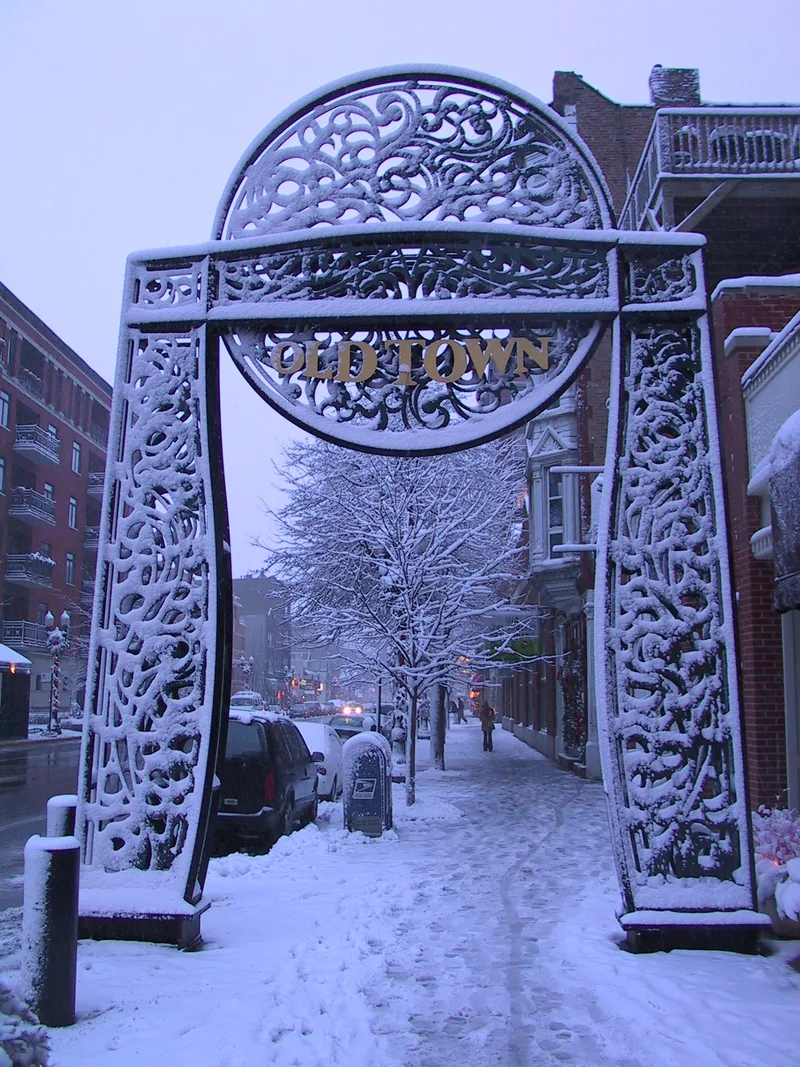
Old Town Triangle is a compact residential neighborhood just north of Chicago's Loop, set between North Avenue, Lincoln Park, Clark Street and Armitage. Of its 523 structures, 213 are rated significant and 256 contributing. Most are small brick, frame or mixed-material cottages, three- and four-story flats, rowhouses and a few commercial buildings, set on tree-lined streets and overseen by the spire of St. Michael's Church. The area began as farmland subdivided from 1845, settled first by French and then German immigrants, and was rebuilt quickly after the 1871 fire. Developments such as Crilly Court show how working-class artisans and wealthier residents lived side by side. The district is recognized for preserving an early urban working-class character, a cohesive scale and a wide range of post-fire architectural styles. Community revival from the 1930s, the Old Town Art Fair and a 1977 Chicago Landmark designation helped sustain that character.
Machine-generated summary. This summary was generated by a language model from the official nomination document and has not been reviewed line by line by an editor. It may contain errors. Check the source document before relying on any detail. Source: nomination document (PDF) · catalog entry. Generated October 2026 (model claude-sonnet-5-5, prompt v1.0-2026-10-29).
| Period of significance | 1872-1928 |
|---|---|
| Styles | Mix of styles popular in Chicago from the 1871 fire onward, including Italianate, Queen Anne and workman's cottages |
| Areas of significance | Architecture, Social History |
| Acreage | 64 |
| Boundary source | NPS cultural-resource GIS polygon |
| Full listing page | Old Town Triangle Historic District (property record) |
What listing means for this property
This is a historic district. Buildings within its boundary are either contributing (they add to the district's significance) or non-contributing. Owners of contributing income-producing buildings can claim the 20% federal rehabilitation tax credit; homeowners should look at state credits. National Register districts impose no design review by themselves; a local historic district ordinance, if one exists, does (the difference explained).
General information, not legal or tax advice. Rules change; confirm with your State Historic Preservation Office or a qualified adviser.