Oakton Historic District

Why it's listed
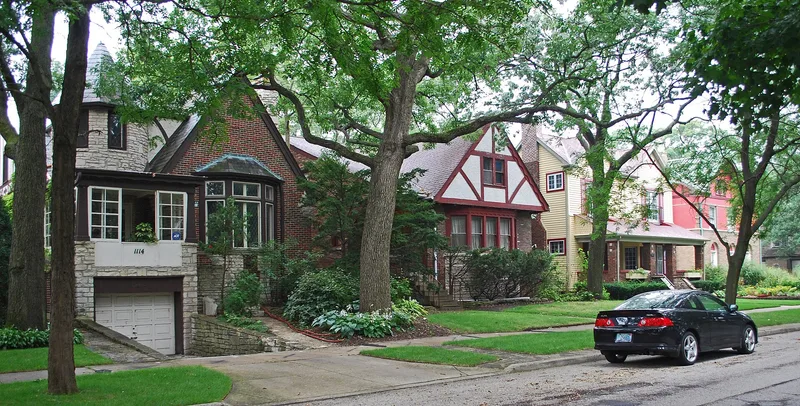
Oakton Historic District is a residential neighborhood in Evanston, Illinois, made up of streets including Austin, Barton, Brummel, Dobson, Harvard, Hull, Mulford and Ridge. Most of its buildings went up in the 1920s and early 1930s, with a few earlier and later examples. Single-family bungalows dominate, many in Craftsman, Chicago Bungalow, Tudor Revival and Dutch Colonial Revival styles, alongside two-flats and several apartment buildings. A small number of postwar Ranch and Modern houses are classed as non-contributing. A long list of local architects and builders worked here, with George W. Klewer, Benedict J. Bruns and builder William F. Blades appearing repeatedly. Ridge Avenue includes a Tudor-style school dating to 1913 and a Tudor/Georgian Revival apartment complex. Hearing testimony associates the area with the 1920s bungalow boom and commuter rail access. Some residents objected to the designation, saying similar neighborhoods exist across the Chicago region.
Machine-generated summary. This summary was generated by a language model from the official nomination document and has not been reviewed line by line by an editor. It may contain errors. Check the source document before relying on any detail. Source: nomination document (PDF) · catalog entry. Generated October 2026 (model claude-sonnet-5-5, prompt v1.0-2026-10-29).
| Styles | Mix of Craftsman and Chicago bungalows, Tudor Revival, Dutch Colonial Revival, French and Spanish Eclectic, Colonial and Georgian Revival, plus some Art Deco and later Ranch and Modern buildings |
|---|---|
| Areas of significance | Architecture, Community Planning and Development |
| Acreage | 55.6 |
| Boundary source | NPS cultural-resource GIS polygon |
| Full listing page | Oakton Historic District (property record) |
What listing means for this property
This is a historic district. Buildings within its boundary are either contributing (they add to the district's significance) or non-contributing. Owners of contributing income-producing buildings can claim the 20% federal rehabilitation tax credit; homeowners should look at state credits. National Register districts impose no design review by themselves; a local historic district ordinance, if one exists, does (the difference explained).
General information, not legal or tax advice. Rules change; confirm with your State Historic Preservation Office or a qualified adviser.