North Wells Street Historic District

The National Park Service has not published a boundary polygon for this district; the map shows the listed properties inside it and the district's reference point.
Why it's listed
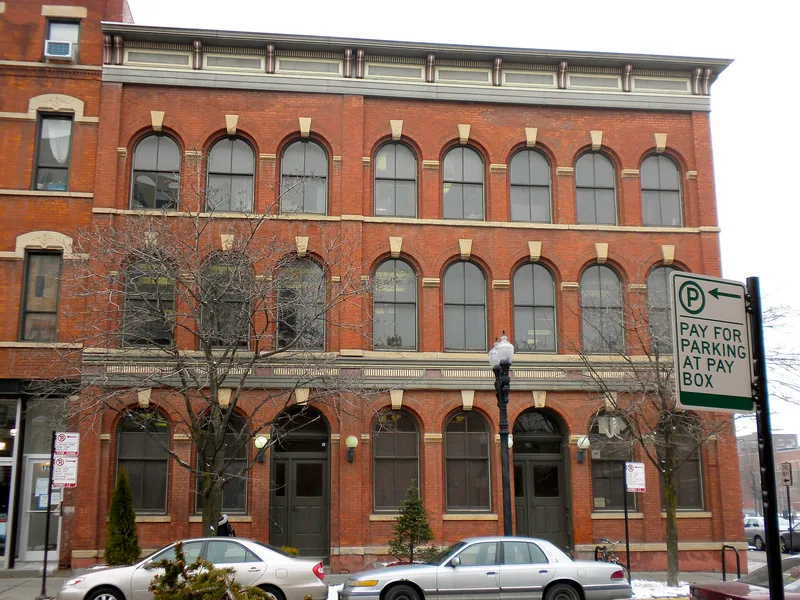
This block-long row of seven buildings on North Wells Street in Chicago, between Scott and Goethe streets, dates from 1871 to 1888. It includes a two-story frame storefront built right after the Chicago Fire, an 1870s Italianate enginehouse for Engine Company No. 27, and a three-story brick loft built in 1875 by Anton B. Fiedler to make dress trimmings. Later additions include storefront-and-flat buildings, a carriage maker's factory from 1886, and a Queen Anne building of 1888 designed by Emil Riegert and Charles Knorr. The row was listed because it preserves a commercial street of the post-fire rebuilding period, a type that redevelopment and land clearance have nearly erased on the Near North, Near West and Near South sides. Other Chicago districts from the era are residential. Many buildings have been painted, resurfaced or partly bricked up, but their original designs can still be read, and the block shows how a neighborhood shopping street grew one lot at a time, often with owners living above their shops.
Machine-generated summary. This summary was generated by a language model from the official nomination document and has not been reviewed line by line by an editor. It may contain errors. Check the source document before relying on any detail. Source: nomination document (PDF) · catalog entry. Generated October 2026 (model claude-sonnet-5-5, prompt v1.0-2026-10-29).
| Styles | Italianate (enginehouse and Fiedler factory); Queen Anne (1248 N. Wells); post-fire balloon-frame storefront |
|---|---|
| Areas of significance | Community Planning and Development, Commerce, Architecture |
| Acreage | 0.9 |
| Boundary source | not published |
| Full listing page | North Wells Street Historic District (property record) |
What listing means for this property
This is a historic district. Buildings within its boundary are either contributing (they add to the district's significance) or non-contributing. Owners of contributing income-producing buildings can claim the 20% federal rehabilitation tax credit; homeowners should look at state credits. National Register districts impose no design review by themselves; a local historic district ordinance, if one exists, does (the difference explained).
General information, not legal or tax advice. Rules change; confirm with your State Historic Preservation Office or a qualified adviser.