North Geneva Historic District (Boundary Decrease and Additional Documentation)

Why it's listed
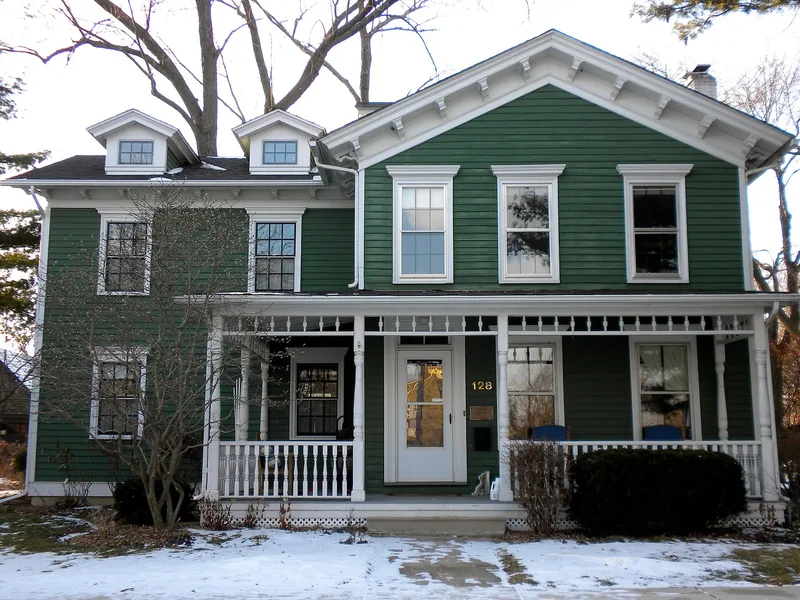
North Geneva is a residential neighborhood on the Fox River in Geneva, Illinois, made up of the city's former First Ward. Laid out on a regular grid of 300-foot blocks, it holds roughly 200 buildings, of which 66 are identified as especially significant and 29 more as contributing architecturally. Most date from 1850 to 1910 and are modest, conservative frame houses in Greek Revival and Italianate styles, with Queen Anne examples and Prairie-influenced designs by the Wilson Brothers, Swedish-born architects. Two notable buildings are made of local riverstone, including the neo-Romanesque United Methodist Church begun in 1872. The area housed early Geneva businessmen, New England settlers and many Swedish immigrants who arrived after the railroad reached the town in 1853. Three of the city's first churches stand here. The district contrasts with the higher-style architecture of central Geneva, and it retains a uniform scale and setback, with some newer commercial intrusions along its edges.
Machine-generated summary. This summary was generated by a language model from the official nomination document and has not been reviewed line by line by an editor. It may contain errors. Check the source document before relying on any detail. Source: nomination document (PDF). Generated October 2026 (model claude-sonnet-5-5, prompt v1.0-2026-10-29).
| Styles | Greek Revival, Italianate, Queen Anne, vernacular Prairie School |
|---|---|
| Areas of significance | Architecture, Industry |
| Acreage | 7.58 |
| Boundary source | NPS cultural-resource GIS polygon |
| Full listing page | North Geneva Historic District (Boundary Decrease and Additional Documentation) (property record) |
What listing means for this property
This is a historic district. Buildings within its boundary are either contributing (they add to the district's significance) or non-contributing. Owners of contributing income-producing buildings can claim the 20% federal rehabilitation tax credit; homeowners should look at state credits. National Register districts impose no design review by themselves; a local historic district ordinance, if one exists, does (the difference explained).
General information, not legal or tax advice. Rules change; confirm with your State Historic Preservation Office or a qualified adviser.