Near North Historic District

Why it's listed
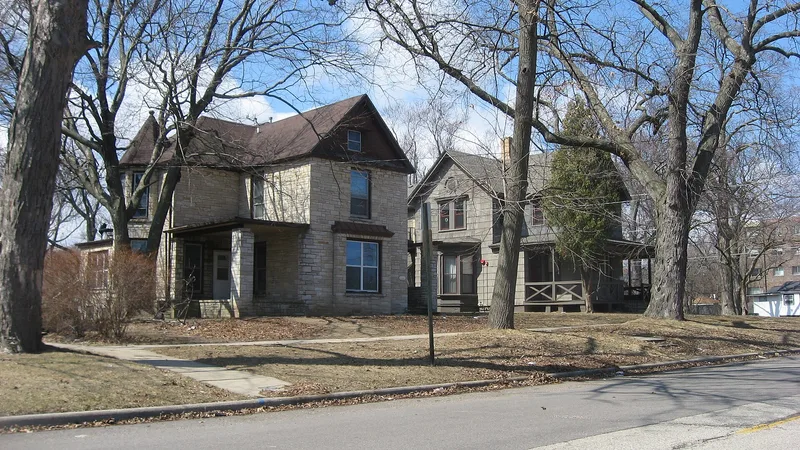
North of downtown Waukegan, on and west of a bluff above Lake Michigan, lies an irregular residential neighborhood of 449 structures covering roughly 203 acres. Its houses date from 1842 to 1928, and every decade in between contributed notable buildings. Greek Revival homes from the 1840s and early 1850s include the Swartout House, described as one of the finest examples of the style in Illinois. Italianate and Queen Anne houses are numerous, and the Prairie School is represented by the Thomas Snelling House by Purcell and Elmslie and the Joseph Arthur House by Tallmadge and Watson, both from 1913. Sixty-eight buildings were judged especially significant. Former residents include nurseryman Robert Douglas, whose grounds became Upton Park, and educator and judge Frances Clarke. Many houses have been divided into apartments and about 44.5 percent have been resided in modern materials, yet the streetscape remains a visible record of the city's growth from its 1841 founding as the county seat through the early twentieth century.
Machine-generated summary. This summary was generated by a language model from the official nomination document and has not been reviewed line by line by an editor. It may contain errors. Check the source document before relying on any detail. Source: nomination document (PDF) · catalog entry. Generated October 2026 (model claude-sonnet-5-5, prompt v1.0-2026-10-29).
| Styles | Greek Revival, Gothic Revival, Italianate, Queen Anne, Prairie School, and other styles, including Romanesque, Stick, Tudor and Classical revivals |
|---|---|
| Areas of significance | Architecture |
| Acreage | 203 |
| Boundary source | NPS cultural-resource GIS polygon |
| Full listing page | Near North Historic District (property record) |
What listing means for this property
This is a historic district. Buildings within its boundary are either contributing (they add to the district's significance) or non-contributing. Owners of contributing income-producing buildings can claim the 20% federal rehabilitation tax credit; homeowners should look at state credits. National Register districts impose no design review by themselves; a local historic district ordinance, if one exists, does (the difference explained).
General information, not legal or tax advice. Rules change; confirm with your State Historic Preservation Office or a qualified adviser.