Naperville Historic District

Why it's listed
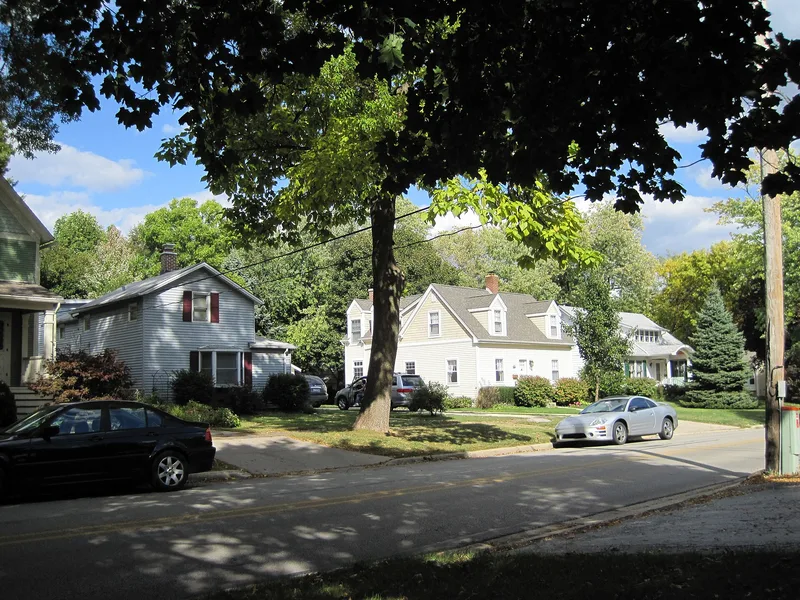
Naperville's historic district takes in most of the older core of the city on the West Branch of the Du Page River, about 28 miles southwest of Chicago. Of roughly 615 structures, 71 were judged especially significant. Two-story frame houses are the most common building type, and Italianate is the dominant style, alongside Greek Revival, Queen Anne, Prairie School and Medieval Revival buildings. Three houses are attributed to Harry Robinson. Landmarks include the 1870 North Central College main building by John Van Osdel, the 1898 Nichols Library, Paw Paw Station of 1833, Joseph Naper's general store of 1847-9, and the Kroehler furniture factory. The town was platted in 1842 and grew through plow making, breweries, nurseries, quarrying, the railroad and furniture manufacturing, with education a second strong force. The district was listed because its buildings still show how Naperville developed as a largely independent small city before recent suburban expansion, even though new construction and parking lots have intruded.
Machine-generated summary. This summary was generated by a language model from the official nomination document and has not been reviewed line by line by an editor. It may contain errors. Check the source document before relying on any detail. Source: nomination document (PDF) · catalog entry. Generated October 2026 (model claude-sonnet-5-5, prompt v1.0-2026-10-29).
| Styles | Italianate dominant; also Greek Revival, Queen Anne, Prairie School and Medieval Revival styles |
|---|---|
| Areas of significance | Exploration/Settlement, Architecture |
| Acreage | 220 |
| Boundary source | NPS cultural-resource GIS polygon |
| Full listing page | Naperville Historic District (property record) |
What listing means for this property
This is a historic district. Buildings within its boundary are either contributing (they add to the district's significance) or non-contributing. Owners of contributing income-producing buildings can claim the 20% federal rehabilitation tax credit; homeowners should look at state credits. National Register districts impose no design review by themselves; a local historic district ordinance, if one exists, does (the difference explained).
General information, not legal or tax advice. Rules change; confirm with your State Historic Preservation Office or a qualified adviser.