Motor Row Historic District

Why it's listed
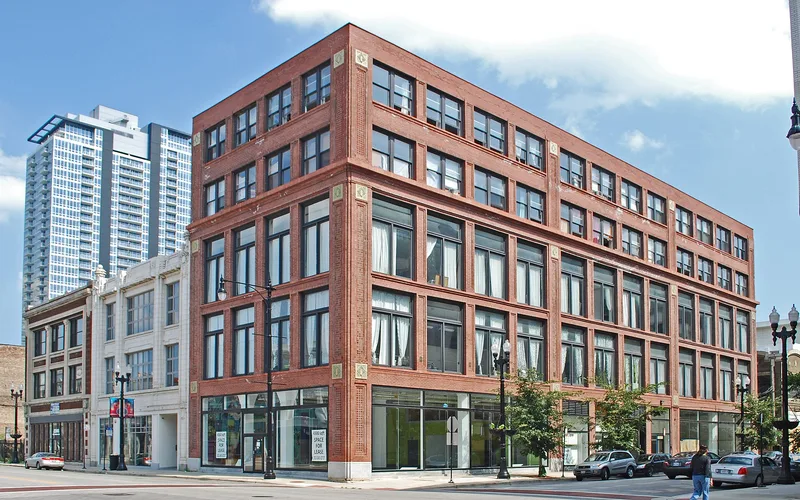
Motor Row is a three-block stretch of Chicago's Near South Side, centered on South Michigan Avenue between Cermak Road and the Stevenson Expressway, with parts of Wabash and Indiana Avenues. It contains dozens of brick and terra cotta buildings put up mostly between 1909 and 1915 to sell, service and store automobiles. Built to the sidewalk edge with large display windows, the showrooms form a nearly continuous streetwall. Designs range from simple Chicago School facades to Renaissance Revival, Spanish Revival, Sullivanesque and Moderne examples. Architects included Holabird & Roche, Alfred Alschuler, Jenney, Mundie & Jensen, and Albert Kahn, whose Cadillac service building is described as his only intact industrial work remaining in Chicago. The district was listed for its commercial history and its architecture. It is described as the largest surviving collection of early automobile showrooms in the country, showing how this building type developed through the 1930s. Upper floors are largely intact, while altered ground-level storefronts are considered reversible.
Machine-generated summary. This summary was generated by a language model from the official nomination document and has not been reviewed line by line by an editor. It may contain errors. Check the source document before relying on any detail. Source: nomination document (PDF) · catalog entry. Generated October 2026 (model claude-sonnet-5-5, prompt v1.0-2026-10-29).
| Period of significance | 1909-1936 |
|---|---|
| Styles | Commercial Style, Moderne, Spanish Revival, Sullivanesque, Renaissance Revival |
| Areas of significance | Commerce, Architecture |
| Acreage | 28 |
| Boundary source | NPS cultural-resource GIS polygon |
| Full listing page | Motor Row Historic District (property record) |
What listing means for this property
This is a historic district. Buildings within its boundary are either contributing (they add to the district's significance) or non-contributing. Owners of contributing income-producing buildings can claim the 20% federal rehabilitation tax credit; homeowners should look at state credits. National Register districts impose no design review by themselves; a local historic district ordinance, if one exists, does (the difference explained).
General information, not legal or tax advice. Rules change; confirm with your State Historic Preservation Office or a qualified adviser.