Monmouth Courthouse Commercial Historic District

Why it's listed
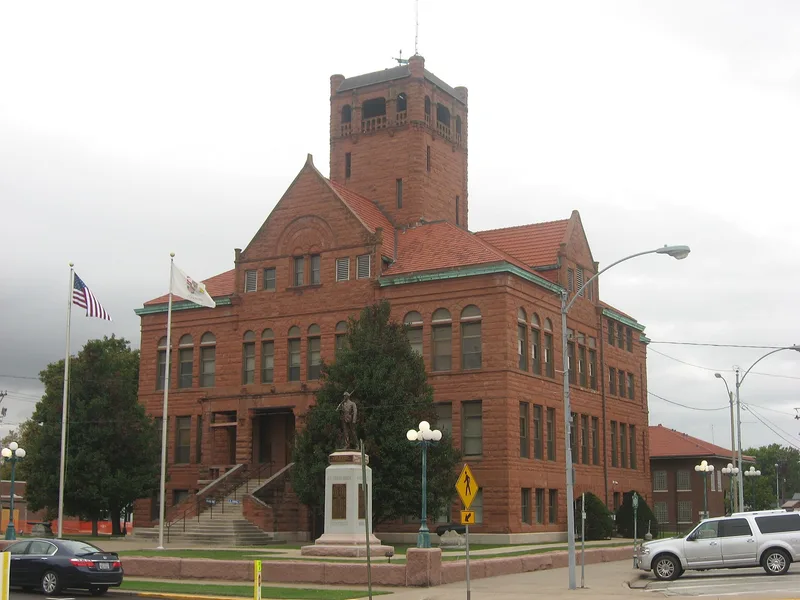
Monmouth's downtown core, arranged around the Public Square in western Illinois, forms a commercial district of about 73 resources. Laid out when the town was platted in 1836, the square holds a circular park, and the district extends along North and South Main Street and South A Street. The oldest surviving building is the 1846 Thompson Block. Fires, especially the 1871 blaze that destroyed the southeast quadrant of the square, led to widespread rebuilding, so many structures show Italianate arched and hooded windows. Other landmarks include the 1895 Richardsonian Romanesque Warren County Courthouse, the 1883 county jail, the three-story Colwell department store of 1904 with its 1911 annex, and the 1935 Art Moderne Maple City Dairy. Most buildings date before 1930, while later construction was smaller in scale after the Depression and the decline of local cigar and farm implement industries. Nine buildings are non-contributing because of recent construction or added false façades. The district shows how a Midwestern county seat grew, burned and recovered.
Machine-generated summary. This summary was generated by a language model from the official nomination document and has not been reviewed line by line by an editor. It may contain errors. Check the source document before relying on any detail. Source: nomination document (PDF) · catalog entry. Generated October 2026 (model claude-sonnet-5-5, prompt v1.0-2026-10-29).
| Styles | Italianate, Queen Anne, Romanesque, Commercial Style, Modern, Art Deco |
|---|---|
| Areas of significance | Architecture, Commerce, Politics/Government |
| Acreage | 30 |
| Boundary source | NPS cultural-resource GIS polygon |
| Full listing page | Monmouth Courthouse Commercial Historic District (property record) |
What listing means for this property
This is a historic district. Buildings within its boundary are either contributing (they add to the district's significance) or non-contributing. Owners of contributing income-producing buildings can claim the 20% federal rehabilitation tax credit; homeowners should look at state credits. National Register districts impose no design review by themselves; a local historic district ordinance, if one exists, does (the difference explained).
General information, not legal or tax advice. Rules change; confirm with your State Historic Preservation Office or a qualified adviser.