Marseilles Hydro Plant

Why it's listed
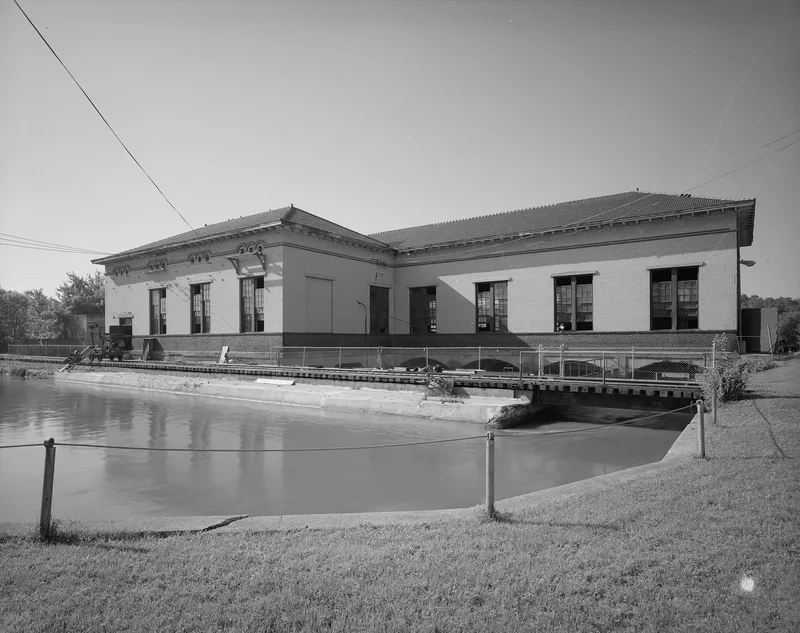
Beside the Illinois River at Marseilles stands a hydroelectric complex built to power an early electric railway. Its main generator building, a Classical Revival structure of concrete, brick and steel, was begun in 1906 and finished in 1911 for the Northern Illinois Light and Traction Company. Engineer C. W. Humphrey directed its design and construction. Water diverted by the Marseilles Dam flows through a head race and forebay to turbines that drive the generators, some of them original Westinghouse and General Electric units still working. The 7.6-acre site also holds a storehouse, an oil shed, the ruins of a coal-fired steam plant used in icy winters, and a 1956 substation. Power from the station fed the interurban lines that ran along the old Illinois and Michigan Canal and connected the valley towns. That role in early electric transportation, along with the archeological potential of the steam plant site, is the basis for the property's listing. Exterior and interior remain largely as built.
Machine-generated summary. This summary was generated by a language model from the official nomination document and has not been reviewed line by line by an editor. It may contain errors. Check the source document before relying on any detail. Source: nomination document (PDF) · catalog entry. Generated October 2026 (model claude-sonnet-5-5, prompt v1.0-2026-10-29).
| Period of significance | 1911 - 1934 |
|---|---|
| Styles | Late 19th and 20th Century Revivals / Classical Revival |
| Areas of significance | Historic - Non-Aboriginal, Transportation |
| Acreage | 7.6 |
| Boundary source | NPS cultural-resource GIS polygon |
| Full listing page | Marseilles Hydro Plant (property record) |
What listing means for this property
This is a historic district. Buildings within its boundary are either contributing (they add to the district's significance) or non-contributing. Owners of contributing income-producing buildings can claim the 20% federal rehabilitation tax credit; homeowners should look at state credits. National Register districts impose no design review by themselves; a local historic district ordinance, if one exists, does (the difference explained).
General information, not legal or tax advice. Rules change; confirm with your State Historic Preservation Office or a qualified adviser.