Maeystown Historic District

Why it's listed
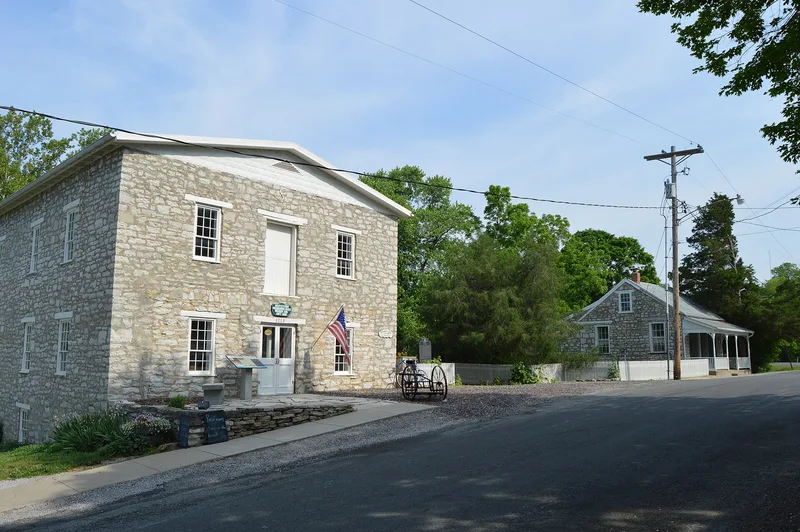
Maeystown is a small Illinois village in southwestern Monroe County, set above the bluffs that separate the Mississippi River flood plain from the uplands. The historic district takes in the whole village as it stood in 1973, matching the old McRoberts claim that Jacob Maeys bought in 1848 and platted in 1856. German immigrants, many of them refugees from the 1848 revolutions, settled the town and kept their language and customs for generations. Its 62 major structures, mostly built before World War I, include limestone, brick and frame houses, a flour mill, a tavern and hotel, a bank, an 1881 stone bridge and the 1866-68 limestone church of St. John. Few buildings would stand out individually, but together with their outbuildings and wooded surroundings they form a rural streetscape the nomination describes as nearly unique in Illinois. Their modest, practical design reflects a self-sufficient farming community.
Machine-generated summary. This summary was generated by a language model from the official nomination document and has not been reviewed line by line by an editor. It may contain errors. Check the source document before relying on any detail. Source: nomination document (PDF) · catalog entry. Generated October 2026 (model claude-sonnet-5-5, prompt v1.0-2026-10-29).
| Styles | Simplified local variants of Greek Revival, Italianate and Queen Anne; few pure examples of any style |
|---|---|
| Areas of significance | European, Exploration/Settlement, Architecture |
| Acreage | 100 |
| Boundary source | NPS cultural-resource GIS polygon |
| Full listing page | Maeystown Historic District (property record) |
What listing means for this property
This is a historic district. Buildings within its boundary are either contributing (they add to the district's significance) or non-contributing. Owners of contributing income-producing buildings can claim the 20% federal rehabilitation tax credit; homeowners should look at state credits. National Register districts impose no design review by themselves; a local historic district ordinance, if one exists, does (the difference explained).
General information, not legal or tax advice. Rules change; confirm with your State Historic Preservation Office or a qualified adviser.