Lowell Park

Why it's listed
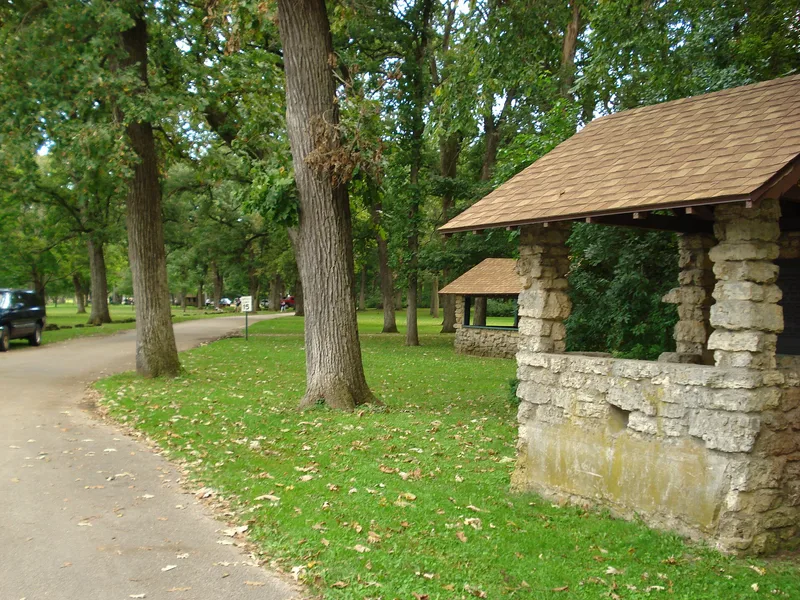
Lowell Park is a 200-acre public park on bluffs and ravines above the Rock River, just north of downtown Dixon, Illinois. Its development began around 1907, with plans by landscape architect Arthur Coleman Comey and later supervision by O. C. Simonds, who directed park work for about two decades. Roads wind down through native forest to a lower terrace of picnic areas and the riverfront. The park holds an unusual collection of buildings for a municipal park, including Woodcote, a Dutch Colonial Revival caretaker's house, a 1922 bathhouse, a well house, and seven shelters of locally quarried limestone, many built by WPA workers in the 1930s. Stone entrance pillars, fireplaces and retaining walls share the same horizontal limestone character. The park was designed in the American Romantic manner, keeping built features subordinate to natural scenery. The nomination notes it was one of the earliest Illinois parks created to preserve a natural area of unusual beauty, and that its craftsmanship and setting define its identity.
Machine-generated summary. This summary was generated by a language model from the official nomination document and has not been reviewed line by line by an editor. It may contain errors. Check the source document before relying on any detail. Source: nomination document (PDF) · catalog entry. Generated October 2026 (model claude-sonnet-5-5, prompt v1.0-2026-10-29).
| Styles | Late 19th and Early 20th Century American Movements/Craftsman; Dutch Colonial Revival (Woodcote); American Romantic landscape design |
|---|---|
| Areas of significance | Entertainment/Recreation, Landscape Architecture |
| Acreage | 200 |
| Boundary source | NPS cultural-resource GIS polygon |
| Full listing page | Lowell Park (property record) |
What listing means for this property
This is a historic district. Buildings within its boundary are either contributing (they add to the district's significance) or non-contributing. Owners of contributing income-producing buildings can claim the 20% federal rehabilitation tax credit; homeowners should look at state credits. National Register districts impose no design review by themselves; a local historic district ordinance, if one exists, does (the difference explained).
General information, not legal or tax advice. Rules change; confirm with your State Historic Preservation Office or a qualified adviser.