Logan Square Boulevards Historic District

Why it's listed
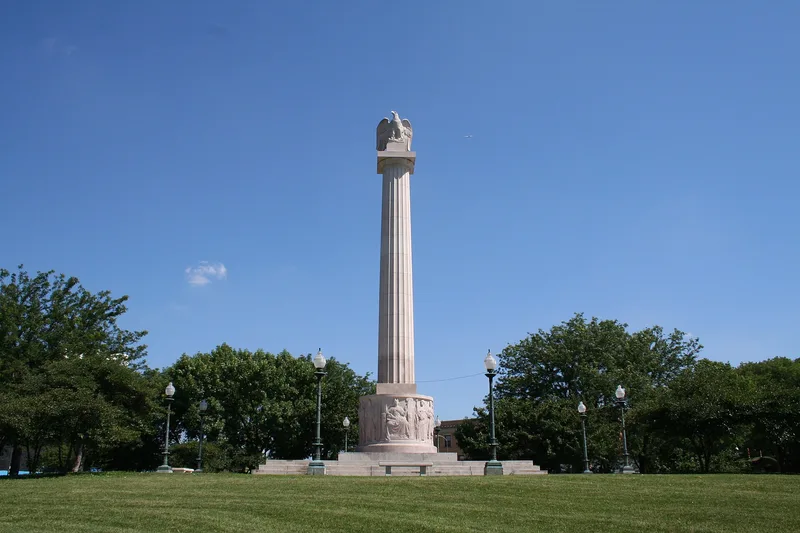
Logan Square Boulevards is a residential historic district on Chicago's northwest side, made up of Logan, Kedzie and Humboldt boulevards and the Logan and Palmer squares. It forms a 2.5 mile section of the city's 26 mile boulevard system and contains roughly 400 buildings. Builders filled the lots between 1890 and 1915 with two- and three-story masonry two-flats, three-flats, single-family houses and apartment buildings, with a few churches and fraternal buildings. The Illinois Centennial Column, designed by Henry Bacon in 1918, anchors Logan Square. The district is notable for its rock-faced Bedford sandstone graystones, whose turrets, towers and bays echo the Romanesque mansions of Chicago's wealthy. Classical, Tudor and Prairie School designs add variety. Its significance rests on the intact boulevard landscape and the architectural quality of the buildings, with few modern intrusions or commercial buildings. It is considered the best-preserved continuous stretch of the city's nineteenth-century boulevards, and it was listed for its architecture, landscape architecture and community design.
Machine-generated summary. This summary was generated by a language model from the official nomination document and has not been reviewed line by line by an editor. It may contain errors. Check the source document before relying on any detail. Source: nomination document (PDF) · catalog entry. Generated October 2026 (model claude-sonnet-5-5, prompt v1.0-2026-10-29).
| Period of significance | 1890-1925 |
|---|---|
| Styles | Eclectic late-nineteenth and early-twentieth century residential architecture: Romanesque and Queen Anne graystones, classical and Tudor revival, and Prairie School. |
| Areas of significance | Community Planning and Development, Landscape Architecture, Architecture |
| Acreage | 265 |
| Boundary source | NPS cultural-resource GIS polygon |
| Full listing page | Logan Square Boulevards Historic District (property record) |
What listing means for this property
This is a historic district. Buildings within its boundary are either contributing (they add to the district's significance) or non-contributing. Owners of contributing income-producing buildings can claim the 20% federal rehabilitation tax credit; homeowners should look at state credits. National Register districts impose no design review by themselves; a local historic district ordinance, if one exists, does (the difference explained).
General information, not legal or tax advice. Rules change; confirm with your State Historic Preservation Office or a qualified adviser.