Lincoln's New Salem Village

Why it's listed
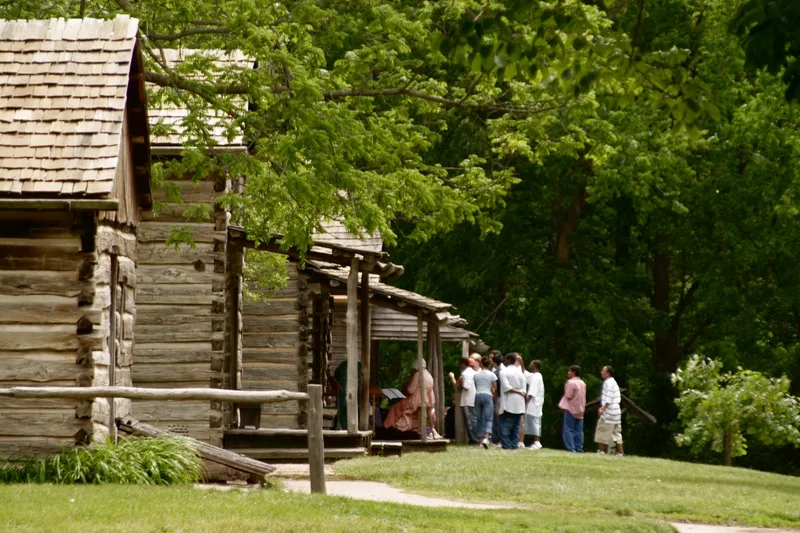
Lincoln's New Salem Village is a reconstructed 1830s frontier settlement on a hill above the Sangamon River south of Petersburg, Illinois, now part of a state park. Its log cabins, stores, a tavern, a school used for church services and a mill stand on their original sites, many on original stone foundations and piers. Only the Onstot Cooper Shop is primarily original; the rest were rebuilt in 1932-33 by the State of Illinois with the National Park Service, after extensive research into cabin styles, locations and even plant types. The village matters because Abraham Lincoln lived here from 1831 to 1837. He clerked in a grocery, ran a mill, partnered in a store, served as postmaster, enlisted in the Black Hawk War, studied surveying and law, and won election to the Illinois General Assembly in 1834. The restoration itself is regarded as a landmark in American historic preservation.
Machine-generated summary. This summary was generated by a language model from the official nomination document and has not been reviewed line by line by an editor. It may contain errors. Check the source document before relying on any detail. Source: nomination document (PDF) · catalog entry. Generated October 2026 (model claude-sonnet-5-5, prompt v1.0-2026-10-29).
| Period of significance | 19th Century (1831-1837 Lincoln residence) |
|---|---|
| Styles | Log cabin and timber construction; reconstructed 1830s frontier village |
| Areas of significance | Politics/Government |
| Acreage | 20 |
| Boundary source | NPS cultural-resource GIS polygon |
| Full listing page | Lincoln's New Salem Village (property record) |
What listing means for this property
This is a historic district. Buildings within its boundary are either contributing (they add to the district's significance) or non-contributing. Owners of contributing income-producing buildings can claim the 20% federal rehabilitation tax credit; homeowners should look at state credits. National Register districts impose no design review by themselves; a local historic district ordinance, if one exists, does (the difference explained).
General information, not legal or tax advice. Rules change; confirm with your State Historic Preservation Office or a qualified adviser.