Lincoln Home National Historic Site

The National Park Service has not published a boundary polygon for this district; the map shows the listed properties inside it and the district's reference point.
Why it's listed
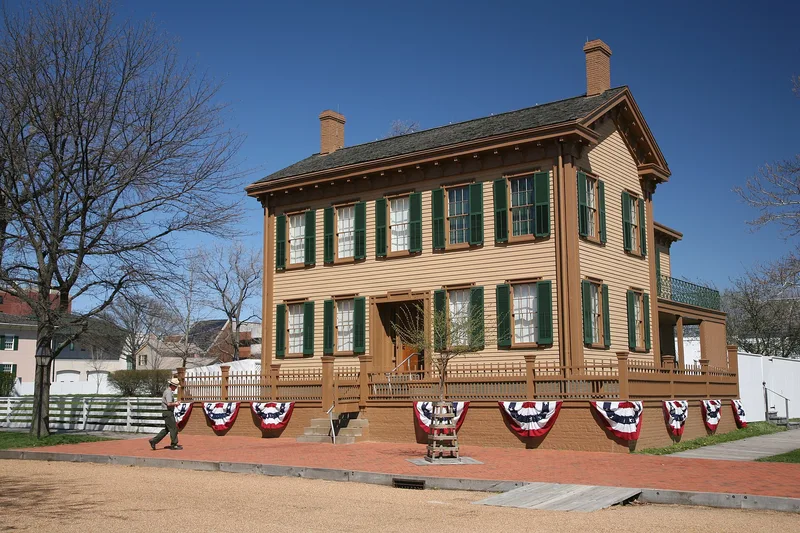
Abraham Lincoln's only owned home is a frame house at 8th and Jackson Streets in Springfield, Illinois. Built in 1839 as a one-story cottage with two attic rooms, it was bought by Lincoln from the Rev. Charles Dresser in January 1844. The family lived there until 1861, apart from the years Lincoln served in Congress. Three more sons were born in the house, and the structure was enlarged to two full stories with twelve rooms. Built of native woods including oak, hickory and black walnut, it was the setting where Lincoln received the Republican nominating committee on May 17, 1860, and held a farewell levee on February 6, 1861. Later occupants included a railroad president and a Lincoln collector. In 1887 Robert Todd Lincoln gave the house to the State of Illinois, which has run it as a museum furnished with some original Lincoln pieces and reproduced interiors. It was recorded in excellent condition in 1959.
Machine-generated summary. This summary was generated by a language model from the official nomination document and has not been reviewed line by line by an editor. It may contain errors. Check the source document before relying on any detail. Source: nomination document (PDF) · catalog entry. Generated October 2026 (model claude-sonnet-5-5, prompt v1.0-2026-10-29).
| Period of significance | 1844-1861 |
|---|---|
| Areas of significance | Law, Politics/Government |
| Acreage | 7.8 |
| Boundary source | not published |
| Full listing page | Lincoln Home National Historic Site (property record) |
What listing means for this property
This is a historic district. Buildings within its boundary are either contributing (they add to the district's significance) or non-contributing. Owners of contributing income-producing buildings can claim the 20% federal rehabilitation tax credit; homeowners should look at state credits. National Register districts impose no design review by themselves; a local historic district ordinance, if one exists, does (the difference explained).
General information, not legal or tax advice. Rules change; confirm with your State Historic Preservation Office or a qualified adviser.