Lincoln Courthouse Square Historic District

Why it's listed
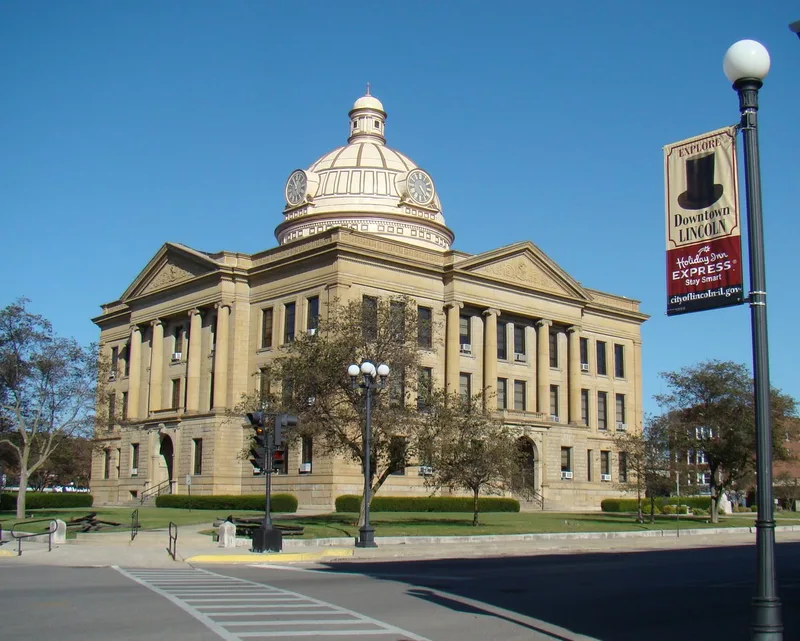
Lincoln's central business district, about ten square blocks around the Logan County Courthouse square, forms a historic district of 112 buildings. The town was laid out in 1853 parallel to the railroad, and commerce grew in two clusters: one near the tracks and one facing the courthouse. Ten fires between 1870 and 1878 destroyed most early buildings, so the district mainly reflects the late 19th and early 20th centuries. Two and three story brick commercial buildings dominate, 45 of them Italianate with bracketed cornices and decorative hoodmolds. Other styles include Queen Anne duplexes, Mission, Romanesque Revival and Art Deco. The domed neo-classical courthouse of 1903 is the most prominent building. Historically, the area is tied to Abraham Lincoln, who advised the town founders and owned property on the square, and to the Scully family, large farmland owners and early supporters of soil conservation. Storefronts have often been altered, but upper floors and many cornices survive.
Machine-generated summary. This summary was generated by a language model from the official nomination document and has not been reviewed line by line by an editor. It may contain errors. Check the source document before relying on any detail. Source: nomination document (PDF) · catalog entry. Generated October 2026 (model claude-sonnet-5-5, prompt v1.0-2026-10-29).
| Period of significance | 1865-1932 |
|---|---|
| Styles | Italianate Commercial predominates (45 of 112 buildings), with Queen Anne, neo-classical, Mission, Romanesque Revival, Art Deco and English Tudor Revival examples. |
| Areas of significance | Commerce, Politics/Government, Architecture |
| Acreage | 27 |
| Boundary source | NPS cultural-resource GIS polygon |
| Full listing page | Lincoln Courthouse Square Historic District (property record) |
What listing means for this property
This is a historic district. Buildings within its boundary are either contributing (they add to the district's significance) or non-contributing. Owners of contributing income-producing buildings can claim the 20% federal rehabilitation tax credit; homeowners should look at state credits. National Register districts impose no design review by themselves; a local historic district ordinance, if one exists, does (the difference explained).
General information, not legal or tax advice. Rules change; confirm with your State Historic Preservation Office or a qualified adviser.