Lebanon Historic District

Why it's listed
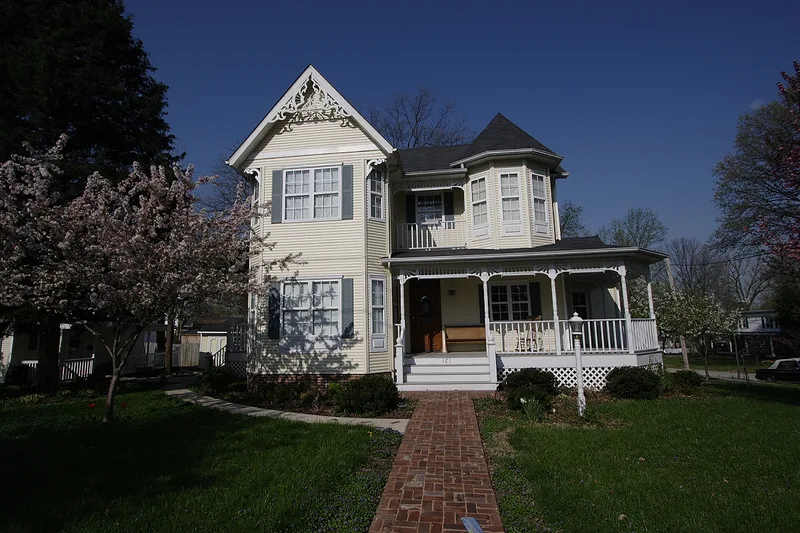
Lebanon's historic district covers roughly 129 acres of a low ridge in northeast St. Clair County, Illinois, about 25 miles east of St. Louis. It includes 211 structures, mostly single-family homes in frame and masonry, along with a nearly continuous wall of two- and three-story brick commercial buildings on St. Louis Street. Styles range from the simple Federal Mermaid Inn of 1830 to Greek Revival, Italianate, Second Empire and Queen Anne buildings. McKendree College, organized in 1828 as the Lebanon Seminary, anchors the northwest and is among the oldest colleges in the state. The town also grew along the Vincennes-St. Louis road, and Charles Dickens stayed at the Mermaid Inn in 1842. A section on the southwest edge protects a Late Woodland village and mound site that may help explain relations with the Mississippian culture at Cahokia. Together these features were judged to give the district architectural, archaeological and historical importance.
Machine-generated summary. This summary was generated by a language model from the official nomination document and has not been reviewed line by line by an editor. It may contain errors. Check the source document before relying on any detail. Source: nomination document (PDF) · catalog entry. Generated October 2026 (model claude-sonnet-5-5, prompt v1.0-2026-10-29).
| Period of significance | 1800-1899 |
|---|---|
| Styles | Federal, Greek Revival, Italianate, Second Empire and Queen Anne, with some Cottage Gothic, Classical Revival and Tudor Revival |
| Areas of significance | Prehistoric, Education, Politics/Government, Architecture |
| Acreage | 129 |
| Boundary source | NPS cultural-resource GIS polygon |
| Full listing page | Lebanon Historic District (property record) |
What listing means for this property
This is a historic district. Buildings within its boundary are either contributing (they add to the district's significance) or non-contributing. Owners of contributing income-producing buildings can claim the 20% federal rehabilitation tax credit; homeowners should look at state credits. National Register districts impose no design review by themselves; a local historic district ordinance, if one exists, does (the difference explained).
General information, not legal or tax advice. Rules change; confirm with your State Historic Preservation Office or a qualified adviser.