Lathrop, Julia C., Homes

Why it's listed
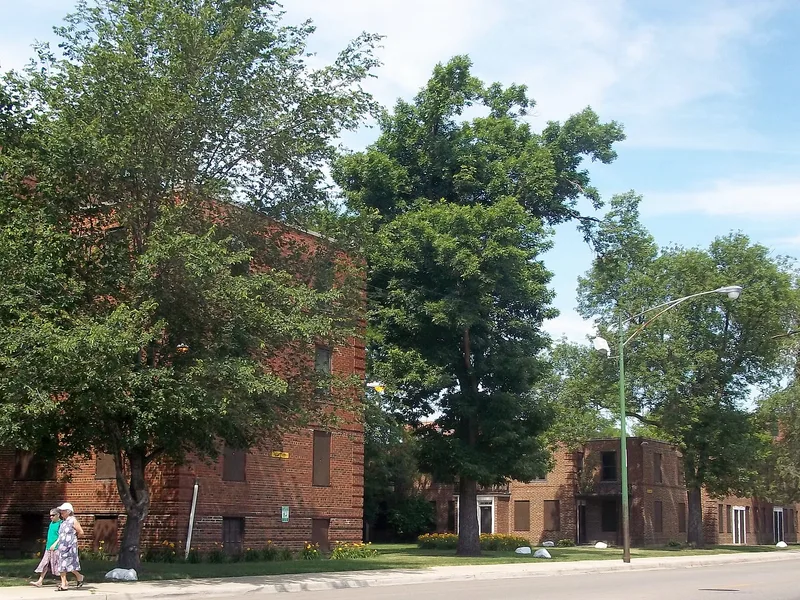
Lathrop Homes is a federally supported public housing complex on a 35-acre strip beside the North Branch of the Chicago River on Chicago's north side. Built in 1935-1938 under the Housing Division of the Public Works Administration, it was designed by a team headed by architect Robert DeGoyler, with landscape architect Jens Jensen shaping the road layout and planting. Thirty-one original buildings, mostly two- to five-story brick-veneered apartment blocks and row houses, face the streets and enclose quiet rear courtyards and lawns for residents. Brick colonnades link buildings and lead into the interior open spaces. The plan follows Clarence Stein and Henry Wright's ideas about limiting traffic and creating safe play areas. The site is considered important both nationally and within Chicago for its site plan and its traditional, ornamented buildings. A 1959 senior building and a 1960 recreation center were added later and do not contribute to the historic character.
Machine-generated summary. This summary was generated by a language model from the official nomination document and has not been reviewed line by line by an editor. It may contain errors. Check the source document before relying on any detail. Source: nomination document (PDF) · catalog entry. Generated October 2026 (model claude-sonnet-5-5, prompt v1.0-2026-10-29).
| Styles | Moderne; Classical Revival |
|---|---|
| Areas of significance | Architecture, Landscape Architecture, Community Planning and Development |
| Acreage | 35.3 |
| Boundary source | NPS cultural-resource GIS polygon |
| Full listing page | Lathrop, Julia C., Homes (property record) |
What listing means for this property
This is a historic district. Buildings within its boundary are either contributing (they add to the district's significance) or non-contributing. Owners of contributing income-producing buildings can claim the 20% federal rehabilitation tax credit; homeowners should look at state credits. National Register districts impose no design review by themselves; a local historic district ordinance, if one exists, does (the difference explained).
General information, not legal or tax advice. Rules change; confirm with your State Historic Preservation Office or a qualified adviser.