LaSalle Street Auto Row Historic District

Why it's listed
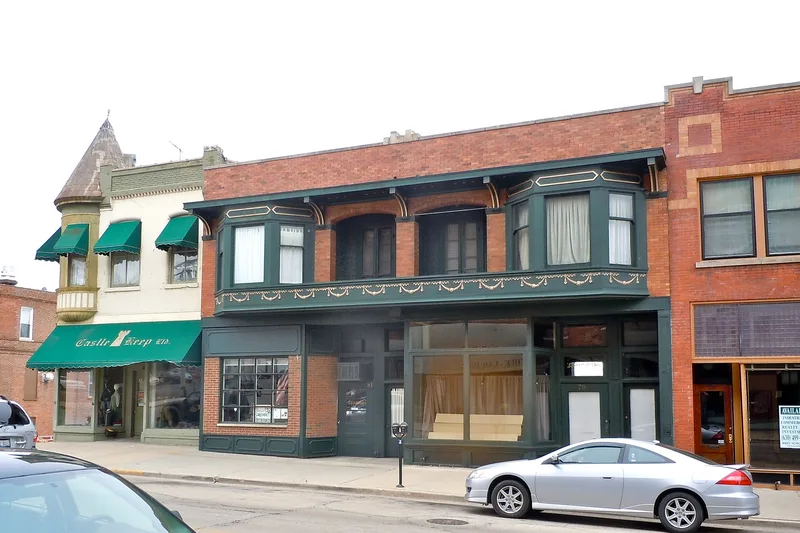
LaSalle Street Auto Row is a block of fifteen brick commercial buildings on the eastern edge of downtown Aurora, Illinois. Three were built around 1890 in the Late Victorian manner; the rest went up between 1907 and 1930 in the Commercial style, with limestone and terra cotta trim. Until the 1880s and 1890s the street was residential, home to wealthy families such as Senator H.H. Evans, but downtown growth pushed commercial uses east of Broadway. Coats Garage, built about 1907, was the first automobile business on the block. By 1912 a local newspaper advertisement called the street "Auto Row," and by the 1920s car dealers, tire shops and garages dominated it. Other buildings include the Odd Fellows hall, the Loyal Order of Moose hall and the Finch & McCullouch printing block. Some storefronts have been boarded up or altered, though several have recently been restored. The street retains more of its original character than neighboring commercial blocks, which lost more buildings to demolition.
Machine-generated summary. This summary was generated by a language model from the official nomination document and has not been reviewed line by line by an editor. It may contain errors. Check the source document before relying on any detail. Source: nomination document (PDF) · catalog entry. Generated October 2026 (model claude-sonnet-5-5, prompt v1.0-2026-10-29).
| Styles | Late Victorian; Commercial Style |
|---|---|
| Areas of significance | Commerce, Architecture |
| Acreage | 1.6 |
| Boundary source | NPS cultural-resource GIS polygon |
| Full listing page | LaSalle Street Auto Row Historic District (property record) |
What listing means for this property
This is a historic district. Buildings within its boundary are either contributing (they add to the district's significance) or non-contributing. Owners of contributing income-producing buildings can claim the 20% federal rehabilitation tax credit; homeowners should look at state credits. National Register districts impose no design review by themselves; a local historic district ordinance, if one exists, does (the difference explained).
General information, not legal or tax advice. Rules change; confirm with your State Historic Preservation Office or a qualified adviser.