Lakewood Balmoral Historic District

Why it's listed
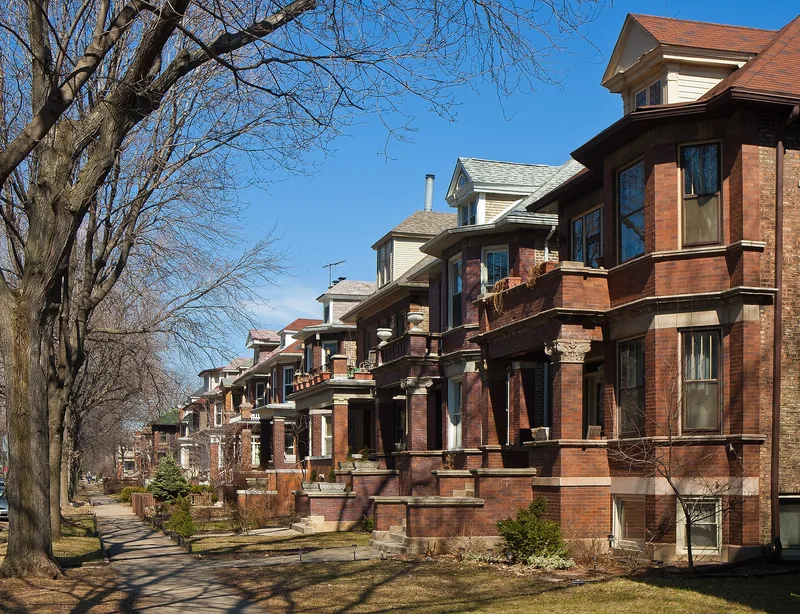
Lakewood Balmoral is a twelve-block residential neighborhood on Chicago's northern edge, near Lake Michigan. It began as Cochran's Third Addition to Edgewater, a suburb laid out by developer John Lewis Cochran, who borrowed street names such as Bryn Mawr and Berwyn from Philadelphia's Main Line. Nearly all of its 490 contributing buildings went up between 1893 and 1915. They include detached single-family houses, duplex town homes and two-flats in Queen Anne, Shingle, Colonial Revival, Craftsman and Prairie-influenced designs. Lots of 30 to 50 feet, even setbacks, tree-lined streets and original brick alleys give the area a cohesive suburban feel. Cochran aimed the addition at middle-class buyers and backed streetcar and elevated rail links to make commuting practical. The neighborhood escaped the apartment-tower redevelopment that changed the rest of Edgewater, so it remains the clearest surviving example of his planning. Its housing is generally in good to excellent condition, despite common changes such as new siding and enclosed porches.
Machine-generated summary. This summary was generated by a language model from the official nomination document and has not been reviewed line by line by an editor. It may contain errors. Check the source document before relying on any detail. Source: nomination document (PDF) · catalog entry. Generated October 2026 (model claude-sonnet-5-5, prompt v1.0-2026-10-29).
| Period of significance | 1890-1929 |
|---|---|
| Styles | Queen Anne, Shingle, Colonial Revival, Classical Revival, Craftsman and Prairie influences |
| Areas of significance | Community Planning and Development |
| Acreage | 63 |
| Boundary source | NPS cultural-resource GIS polygon |
| Full listing page | Lakewood Balmoral Historic District (property record) |
What listing means for this property
This is a historic district. Buildings within its boundary are either contributing (they add to the district's significance) or non-contributing. Owners of contributing income-producing buildings can claim the 20% federal rehabilitation tax credit; homeowners should look at state credits. National Register districts impose no design review by themselves; a local historic district ordinance, if one exists, does (the difference explained).
General information, not legal or tax advice. Rules change; confirm with your State Historic Preservation Office or a qualified adviser.