Lake Forest Historic District

Why it's listed
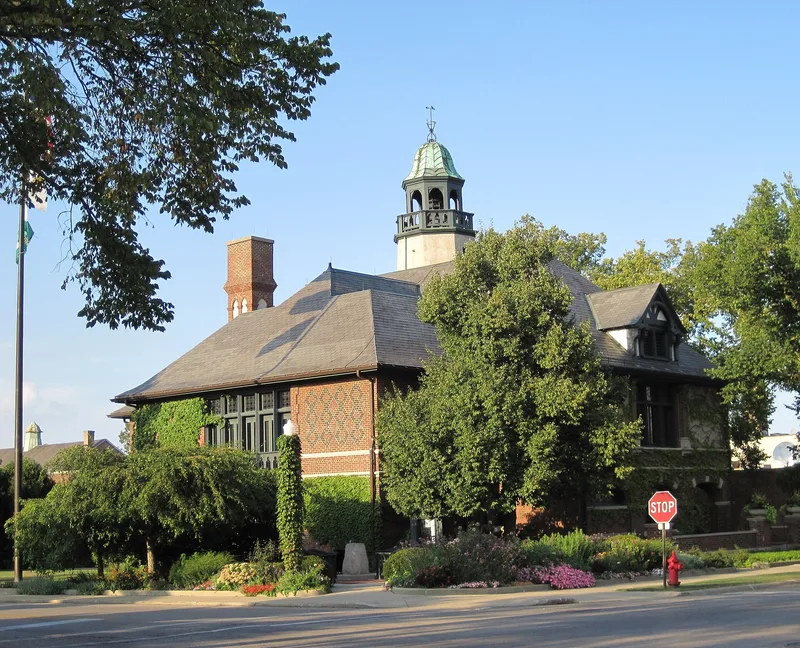
Lake Forest Historic District takes in most of the original town of Lake Forest, Illinois, about 30 miles north of Chicago on the Lake Michigan shore. The town was laid out in 1857 by topographer Jed Hotchkiss, whose winding streets follow wooded bluffs and ravines and give the area a park-like character. Large country houses sit on lots ranging from one to fifty acres, alongside Lake Forest University, Barat College, Ferry Hall, and Market Square, described as an early planned shopping center designed for the automobile. Of 474 structures, 101 were judged especially significant, while recent construction accounts for about a third of the total. Tudor, Classical and Gothic styles dominate, and architects such as Howard van Doren Shaw, Charles Frost, Henry Ives Cobb and David Adler designed many buildings. Landscape architects including O.C. Simonds and Jens Jensen shaped its estates. Many leading Chicago business figures built homes here.
Machine-generated summary. This summary was generated by a language model from the official nomination document and has not been reviewed line by line by an editor. It may contain errors. Check the source document before relying on any detail. Source: nomination document (PDF) · catalog entry. Generated October 2026 (model claude-sonnet-5-5, prompt v1.0-2026-10-29).
| Styles | Predominantly Tudor, Classical and Gothic revival styles, with earlier Italianate and Second Empire buildings and a few Chateauesque, Swiss Renaissance and Arts and Crafts examples |
|---|---|
| Areas of significance | Community Planning and Development, Landscape Architecture, Architecture |
| Acreage | 1019 |
| Boundary source | NPS cultural-resource GIS polygon |
| Full listing page | Lake Forest Historic District (property record) |
What listing means for this property
This is a historic district. Buildings within its boundary are either contributing (they add to the district's significance) or non-contributing. Owners of contributing income-producing buildings can claim the 20% federal rehabilitation tax credit; homeowners should look at state credits. National Register districts impose no design review by themselves; a local historic district ordinance, if one exists, does (the difference explained).
General information, not legal or tax advice. Rules change; confirm with your State Historic Preservation Office or a qualified adviser.