Lake Forest Cemetery

Why it's listed
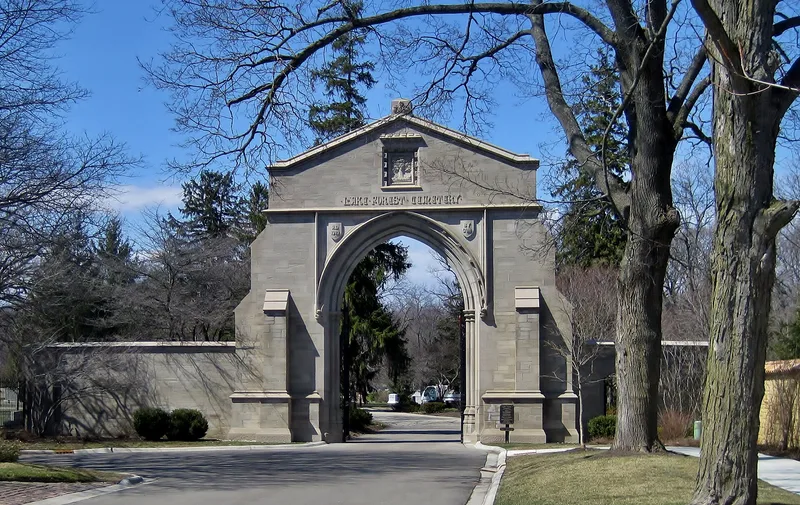
Lake Forest Cemetery occupies about 23 acres on the bluffs above Lake Michigan, on the northern edge of Lake Forest, Illinois. Almerin Hotchkiss chose the site in 1857 for its rolling ground, ravines and lake views. William Le Baron Jenney revised the plat in 1882 and set out the road system still in use. In 1900-1901 Ossian Cole Simonds redesigned the grounds in the Prairie Style of Landscape Gardening, with graded open spaces, sunlit clearings, enclosing plantings and framed views. At least 50 trees from his early plantings remain. The cemetery also holds 17 contributing structures and 131 contributing objects. These include the 1919 Barrell Memorial Gate of gray limestone with wrought iron work, private granite mausoleums built between about 1906 and 1934, a columbarium and a white marble Roman-style funerary temple. The cemetery is still active and keeps the quiet, park-like character that Simonds created.
Machine-generated summary. This summary was generated by a language model from the official nomination document and has not been reviewed line by line by an editor. It may contain errors. Check the source document before relying on any detail. Source: nomination document (PDF) · catalog entry. Generated October 2026 (model claude-sonnet-5-5, prompt v1.0-2026-10-29).
| Styles | Gothic Revival, Classical Revival, Art Deco; landscape in the Prairie Style of Landscape Gardening |
|---|---|
| Areas of significance | Landscape Architecture, Art, Architecture |
| Acreage | 15 |
| Boundary source | NPS cultural-resource GIS polygon |
| Full listing page | Lake Forest Cemetery (property record) |
What listing means for this property
This is a historic district. Buildings within its boundary are either contributing (they add to the district's significance) or non-contributing. Owners of contributing income-producing buildings can claim the 20% federal rehabilitation tax credit; homeowners should look at state credits. National Register districts impose no design review by themselves; a local historic district ordinance, if one exists, does (the difference explained).
General information, not legal or tax advice. Rules change; confirm with your State Historic Preservation Office or a qualified adviser.