Kitchell Park

Why it's listed
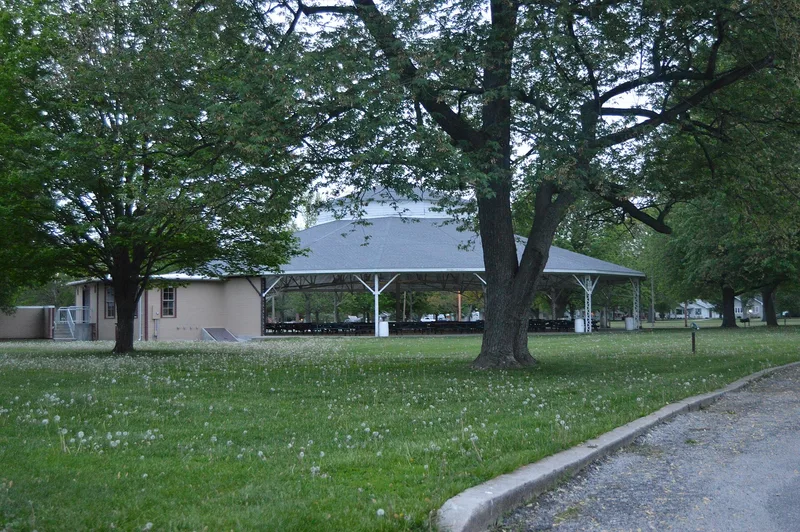
Kitchell Park is a 40-acre public park in southeastern Pana, Illinois, laid out on the site of the old Pana fairgrounds, where fairs and horse racing took place from about 1886. Captain and Mrs. J.W. Kitchell bought the land and donated it to the town in 1908, then funded landscaping, a playground, a lagoon, and row boats. The park hosted the annual Chautauqua, a nine-day program of lectures, music, opera, and other entertainment, from 1907 to 1931. Surviving features from that era include an umbrella-style auditorium built in 1911, a concrete arched bridge from 1910, an iron-arched gateway, a brick ticket booth, a memorial boulder to Kitchell, and a 1919 veterans memorial sculpted by Lorado Taft. Newer ball diamonds, tennis courts, a pool, pavilions, and restrooms do not count as contributing. The park is significant for its long role in local recreation and entertainment.
Machine-generated summary. This summary was generated by a language model from the official nomination document and has not been reviewed line by line by an editor. It may contain errors. Check the source document before relying on any detail. Source: nomination document (PDF) · catalog entry. Generated October 2026 (model claude-sonnet-5-5, prompt v1.0-2026-10-29).
| Period of significance | 1909-1942 |
|---|---|
| Styles | No style |
| Areas of significance | Entertainment/Recreation |
| Acreage | 40 |
| Boundary source | NPS cultural-resource GIS polygon |
| Full listing page | Kitchell Park (property record) |
What listing means for this property
This is a historic district. Buildings within its boundary are either contributing (they add to the district's significance) or non-contributing. Owners of contributing income-producing buildings can claim the 20% federal rehabilitation tax credit; homeowners should look at state credits. National Register districts impose no design review by themselves; a local historic district ordinance, if one exists, does (the difference explained).
General information, not legal or tax advice. Rules change; confirm with your State Historic Preservation Office or a qualified adviser.