King, Moses, Brick and Tile Works

Why it's listed
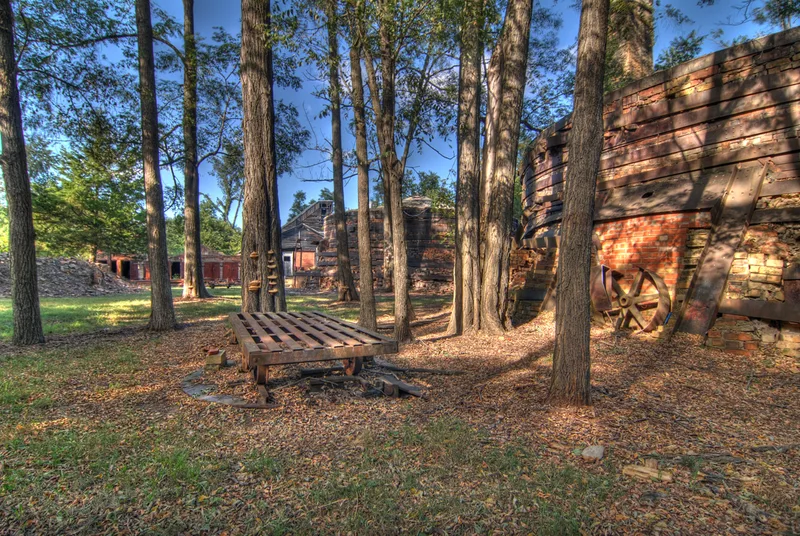
Moses King Brick & Tile Works is an industrial complex on North Coal Street in Colchester, Illinois, where brick and tile were made from 1881 into the 1950s. King, an English-born coal miner, began the business after finding that his land held surface clay, shale and fireclay, and that he had more coal than he could sell for firing. The district includes four surviving beehive kilns, two tall exhaust stacks, a 1920 factory building, a 100-foot drying shed with tunnels, an office, a machine shop and King's own 1884 brick house. The kilns, lined with firebrick and held by steel bands, switched from coal to natural gas in the mid-1950s. Illinois had 462 towns with brick and tile operations in 1886 but only 71 by 1920, and the King yard kept developing through that decline. Today the site hosts art workshops, events and gardens, and some small buildings serve as guest cottages.
Machine-generated summary. This summary was generated by a language model from the official nomination document and has not been reviewed line by line by an editor. It may contain errors. Check the source document before relying on any detail. Source: nomination document (PDF) · catalog entry. Generated October 2026 (model claude-sonnet-5-5, prompt v1.0-2026-10-29).
| Period of significance | 1881-1951 |
|---|---|
| Styles | Late Victorian, Front-Gabled; King home described as Folk Victorian with Carpenter Gothic details |
| Areas of significance | Industry |
| Acreage | 9 |
| Boundary source | NPS cultural-resource GIS polygon |
| Full listing page | King, Moses, Brick and Tile Works (property record) |
What listing means for this property
This is a historic district. Buildings within its boundary are either contributing (they add to the district's significance) or non-contributing. Owners of contributing income-producing buildings can claim the 20% federal rehabilitation tax credit; homeowners should look at state credits. National Register districts impose no design review by themselves; a local historic district ordinance, if one exists, does (the difference explained).
General information, not legal or tax advice. Rules change; confirm with your State Historic Preservation Office or a qualified adviser.