Keithsburg Historic District

Why it's listed
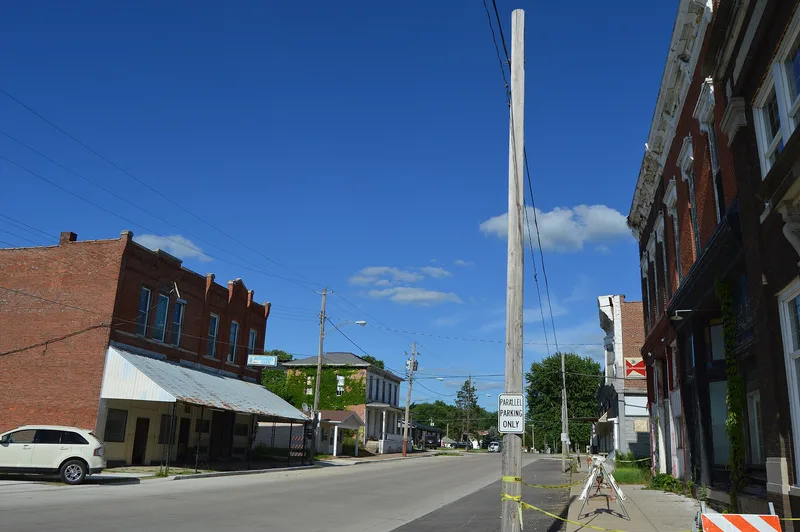
Keithsburg's historic district covers roughly four blocks of the town's central business district along the Mississippi River in Mercer County, Illinois. Its 17 buildings are mostly one- or two-story brick or frame commercial structures with load-bearing masonry walls, cast iron storefronts and pressed metal cornices and window hoods. Fifteen of them date from the period of significance, 1847 to 1915. Keithsburg was platted in 1837 and became the county seat in 1847. Although the seat moved to Aledo in 1857, steamboats and two railroad lines kept the town prosperous as a grain and livestock market serving farmers, including customers from Iowa who arrived by ferry. By 1900 it had electric lights, a waterworks and a telephone company. Later, automobiles and larger neighboring towns reduced the district's role, and many upper floors now sit vacant or used for storage. The remaining buildings still convey the character of a prosperous small-town business district, which the nomination ranks above those of New Boston and Oquawka.
Machine-generated summary. This summary was generated by a language model from the official nomination document and has not been reviewed line by line by an editor. It may contain errors. Check the source document before relying on any detail. Source: nomination document (PDF) · catalog entry. Generated October 2026 (model claude-sonnet-5-5, prompt v1.0-2026-10-29).
| Period of significance | 1847-1915 |
|---|---|
| Areas of significance | Commerce |
| Acreage | 2 |
| Boundary source | NPS cultural-resource GIS polygon |
| Full listing page | Keithsburg Historic District (property record) |
What listing means for this property
This is a historic district. Buildings within its boundary are either contributing (they add to the district's significance) or non-contributing. Owners of contributing income-producing buildings can claim the 20% federal rehabilitation tax credit; homeowners should look at state credits. National Register districts impose no design review by themselves; a local historic district ordinance, if one exists, does (the difference explained).
General information, not legal or tax advice. Rules change; confirm with your State Historic Preservation Office or a qualified adviser.