Greenup Commercial Historic District

Why it's listed
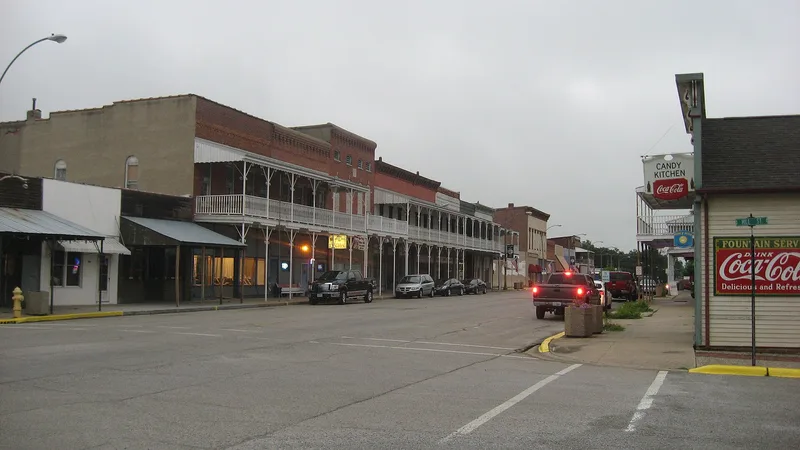
Greenup's commercial core, laid out along the old National Road in Cumberland County, Illinois, is a district of 41 buildings, 31 of which contribute to its historic character. Most are brick, one or two stories tall, and built between about 1872 and 1940. One-story Commercial vernacular storefronts stand alongside late nineteenth century two-story buildings with Italianate details such as metal cornices, brackets and window hoods. A Carnegie Library, a blacksmith shop and a shoe factory complex round out the area. The most striking feature is the number of two-story shed-roof porches, with slender iron supports and scrolled brackets, along with cast iron storefront pilasters from regional foundries. The district was listed for its role in local commerce, tracing the town's shift from horse and wagon days through the railroad to the automobile, and for its modest but well-crafted commercial architecture. Storefront changes are common, but intact rooflines and upper floors keep many buildings contributing.
Machine-generated summary. This summary was generated by a language model from the official nomination document and has not been reviewed line by line by an editor. It may contain errors. Check the source document before relying on any detail. Source: nomination document (PDF) · catalog entry. Generated October 2026 (model claude-sonnet-5-5, prompt v1.0-2026-10-29).
| Period of significance | c. 1872 - 1940 |
|---|---|
| Styles | Commercial vernacular and Italianate |
| Areas of significance | Commerce, Architecture |
| Acreage | 6.1 |
| Boundary source | NPS cultural-resource GIS polygon |
| Full listing page | Greenup Commercial Historic District (property record) |
What listing means for this property
This is a historic district. Buildings within its boundary are either contributing (they add to the district's significance) or non-contributing. Owners of contributing income-producing buildings can claim the 20% federal rehabilitation tax credit; homeowners should look at state credits. National Register districts impose no design review by themselves; a local historic district ordinance, if one exists, does (the difference explained).
General information, not legal or tax advice. Rules change; confirm with your State Historic Preservation Office or a qualified adviser.