Green Bay Road Historic District

Why it's listed
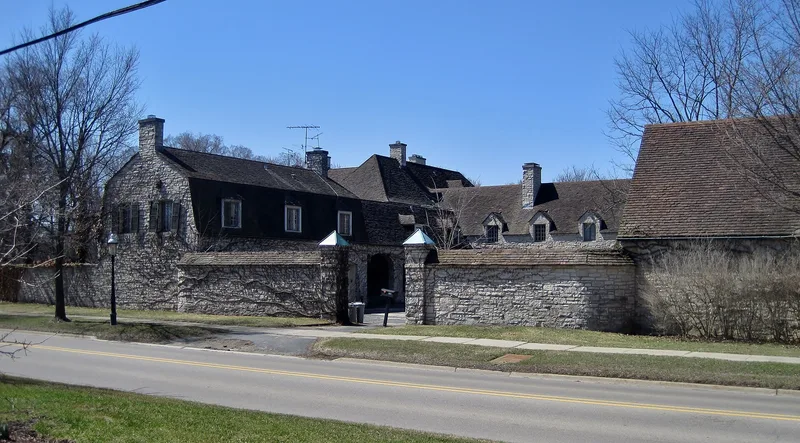
Green Bay Road in Lake Forest, Illinois, runs along a ridge west of the railroad, and the historic district built around it preserves a landscape of country houses and estates created between 1890 and 1945. Henry Ives Cobb was the first to build there in 1890, and Howard Van Doren Shaw soon followed. The Onwentsia Club, founded in the 1890s, became the social center of the area. The district covers about 2.25 miles by 1.75 miles and is almost entirely single-family residential, with large lots, long private drives, mature trees and outbuildings such as gate houses, stables and greenhouses. Colonial Revival, Tudor Revival, French Eclectic and Arts and Crafts styles predominate, with work by architects including Arthur Heun, Harrie Thomas Lindeberg and David Adler. The form counts 153 contributing and 129 noncontributing resources. It was listed as an outstanding example of domestic architecture in an exclusive exurban community, associated with Chicago's business leaders.
Machine-generated summary. This summary was generated by a language model from the official nomination document and has not been reviewed line by line by an editor. It may contain errors. Check the source document before relying on any detail. Source: nomination document (PDF) · catalog entry. Generated October 2026 (model claude-sonnet-5-5, prompt v1.0-2026-10-29).
| Period of significance | 1890-1945 |
|---|---|
| Styles | Colonial Revival, Tudor Revival, Arts and Crafts, French Renaissance Revival, Classical Revival, Art Deco |
| Areas of significance | Architecture, Social History |
| Acreage | 680 |
| Boundary source | NPS cultural-resource GIS polygon |
| Full listing page | Green Bay Road Historic District (property record) |
What listing means for this property
This is a historic district. Buildings within its boundary are either contributing (they add to the district's significance) or non-contributing. Owners of contributing income-producing buildings can claim the 20% federal rehabilitation tax credit; homeowners should look at state credits. National Register districts impose no design review by themselves; a local historic district ordinance, if one exists, does (the difference explained).
General information, not legal or tax advice. Rules change; confirm with your State Historic Preservation Office or a qualified adviser.