Grand View Drive

Why it's listed
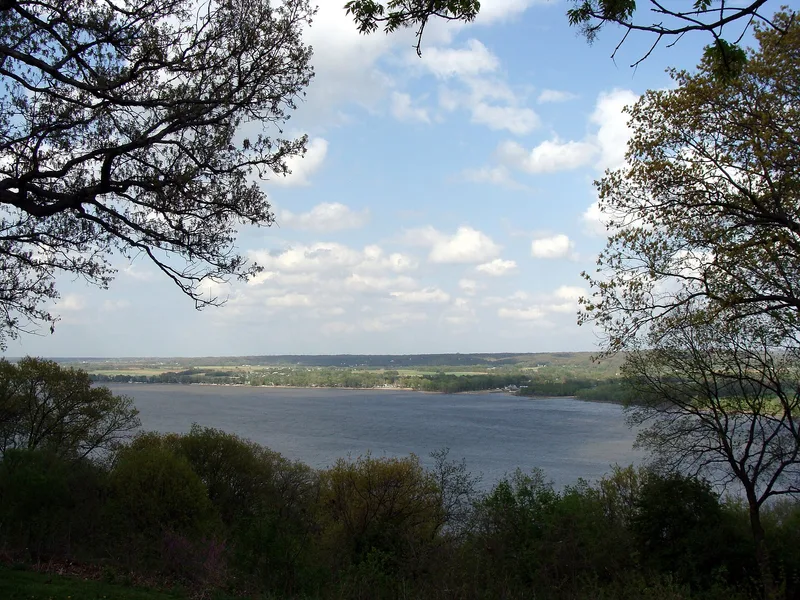
Grand View Drive is a 2.5-mile pleasure driveway and park running along the Illinois River bluffs in Peoria and Peoria Heights. Laid out by Oscar F. Dubuis, the Peoria Park District's first landscape gardener and a former apprentice of Frederick Law Olmsted, it was built beginning in October 1903 almost entirely by hand labor and horse teams on steep, wooded terrain. The road winds along the bluff top, with overlooks offering views of the river valley, turnaround islands with flower beds, and rows of sugar and Norway maples. Dubuis died in 1906, and the drive was his final project. Features that have been lost include a steel observation tower, scrapped in 1942, and a latticed belvedere destroyed by vandals in 1949. The layout, overlooks and many original trees survive, and the roadway keeps its historic crowned profile under later paving. The district also includes a World War I memorial shaft dedicated in 1920 in the Averyville area. It was listed for its landscape design and its connection to Dubuis' work.
Machine-generated summary. This summary was generated by a language model from the official nomination document and has not been reviewed line by line by an editor. It may contain errors. Check the source document before relying on any detail. Source: nomination document (PDF) · catalog entry. Generated October 2026 (model claude-sonnet-5-5, prompt v1.0-2026-10-29).
| Styles | Craftsman |
|---|---|
| Areas of significance | Landscape Architecture, Architecture |
| Acreage | 181.5 |
| Boundary source | NPS cultural-resource GIS polygon |
| Full listing page | Grand View Drive (property record) |
What listing means for this property
This is a historic district. Buildings within its boundary are either contributing (they add to the district's significance) or non-contributing. Owners of contributing income-producing buildings can claim the 20% federal rehabilitation tax credit; homeowners should look at state credits. National Register districts impose no design review by themselves; a local historic district ordinance, if one exists, does (the difference explained).
General information, not legal or tax advice. Rules change; confirm with your State Historic Preservation Office or a qualified adviser.