Grand Crossing Park

Why it's listed
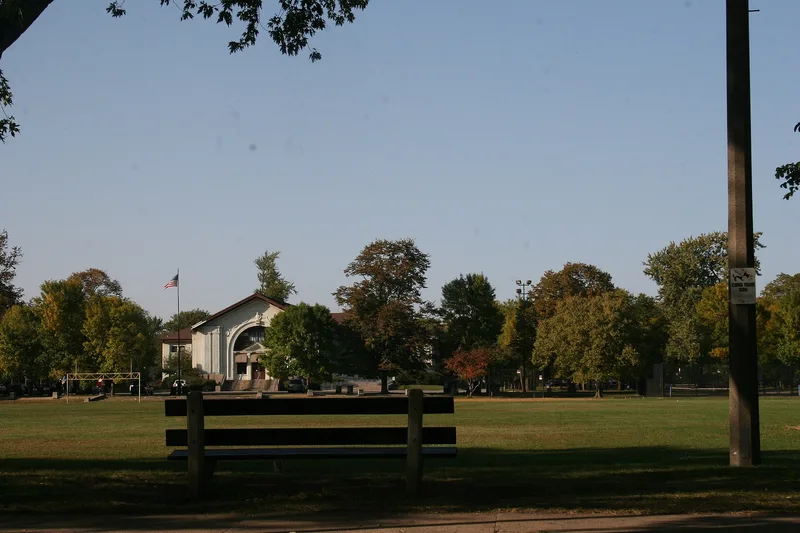
Grand Crossing Park is a 17.16-acre neighborhood park on Chicago's south side, bounded by East 76th and 78th Streets, South Dobson Avenue and South Ingleside Avenue. The South Park Commission began planning it in 1907 as one of four new parks, and the Olmsted Brothers prepared plans that were not carried out. Commission staff designed the park instead, with a depressed ball field on the south, and the field house, pool, playground, running track and service yard on the north. The two-story, cruciform field house was built in 1915 of exposed aggregate concrete with classical details, and it matches the one at Trumbull Park. Its design echoes the earlier Burnham-designed park buildings and the 1893 World's Columbian Exposition. Inside, original woodwork and a five-panel mural, An Allegory of Recreation, survive. Changes include a replaced roof, a painted exterior, a modern pool and lost trees and fencing. The park is listed for its representative design and integrity.
Machine-generated summary. This summary was generated by a language model from the official nomination document and has not been reviewed line by line by an editor. It may contain errors. Check the source document before relying on any detail. Source: nomination document (PDF) · catalog entry. Generated October 2026 (model claude-sonnet-5-5, prompt v1.0-2026-10-29).
| Styles | Beaux Arts Classicism |
|---|---|
| Areas of significance | Architecture, Landscape Architecture, Entertainment/Recreation |
| Acreage | 10.5 |
| Boundary source | NPS cultural-resource GIS polygon |
| Full listing page | Grand Crossing Park (property record) |
What listing means for this property
This is a historic district. Buildings within its boundary are either contributing (they add to the district's significance) or non-contributing. Owners of contributing income-producing buildings can claim the 20% federal rehabilitation tax credit; homeowners should look at state credits. National Register districts impose no design review by themselves; a local historic district ordinance, if one exists, does (the difference explained).
General information, not legal or tax advice. Rules change; confirm with your State Historic Preservation Office or a qualified adviser.