Garrison-Coronado-Haskill Historic District

Why it's listed
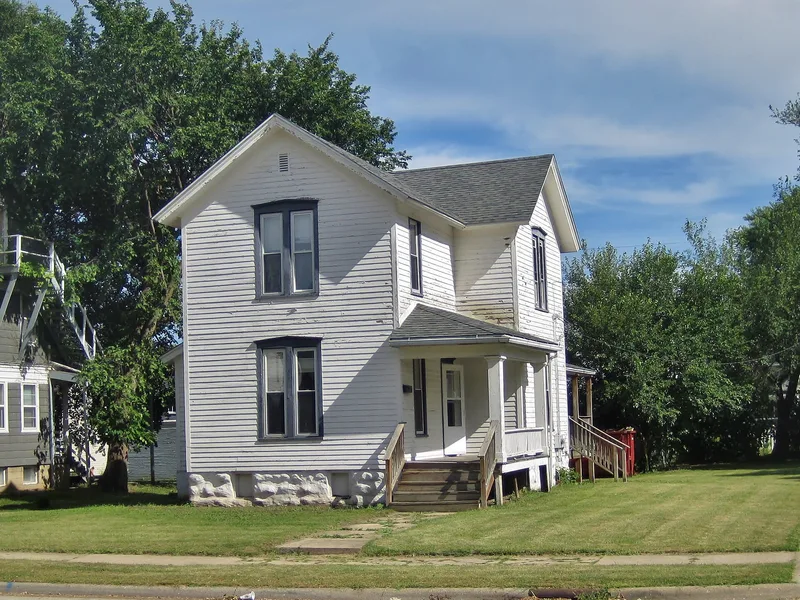
Sixteen blocks on Rockford's west side make up a residential neighborhood that preserves the look of the city's late 19th-century growth. It holds 362 principal buildings, and about 96% of them date from 1870 to 1935, with nearly half built in the 1890s. Most are single-family homes on narrow lots of roughly 40 by 120 feet, with consistent setbacks, sidewalks, mature street trees and rear garages. Queen Anne and Shingle Style houses are the leading high styles, joined by vernacular forms such as Gable Front, Gabled Ell, L-Form and T-Form, plus American Foursquare houses, apartment buildings and a few Colonial and Renaissance Revival examples. The former Garrison School, built in 1887 and designed by George Bradley, is now residential lofts. Only thirteen principal structures are non-contributing. Although artificial siding covers many original clapboard walls, historic forms, porches, windows and doors largely remain. The district was listed for its cohesive, well-preserved record of middle-class housing from a narrow period of development.
Machine-generated summary. This summary was generated by a language model from the official nomination document and has not been reviewed line by line by an editor. It may contain errors. Check the source document before relying on any detail. Source: nomination document (PDF) · catalog entry. Generated October 2026 (model claude-sonnet-5-5, prompt v1.0-2026-10-29).
| Styles | Late Victorian (Queen Anne, Shingle Style); Late 19th and Early 20th Century Revivals (Renaissance Revival, Colonial Revival); Gable Front, Gabled Ell, L-Form, T-Form, American Foursquare |
|---|---|
| Areas of significance | Architecture |
| Acreage | 89 |
| Boundary source | NPS cultural-resource GIS polygon |
| Full listing page | Garrison-Coronado-Haskill Historic District (property record) |
What listing means for this property
This is a historic district. Buildings within its boundary are either contributing (they add to the district's significance) or non-contributing. Owners of contributing income-producing buildings can claim the 20% federal rehabilitation tax credit; homeowners should look at state credits. National Register districts impose no design review by themselves; a local historic district ordinance, if one exists, does (the difference explained).
General information, not legal or tax advice. Rules change; confirm with your State Historic Preservation Office or a qualified adviser.