Elliott Street Historic District

Why it's listed
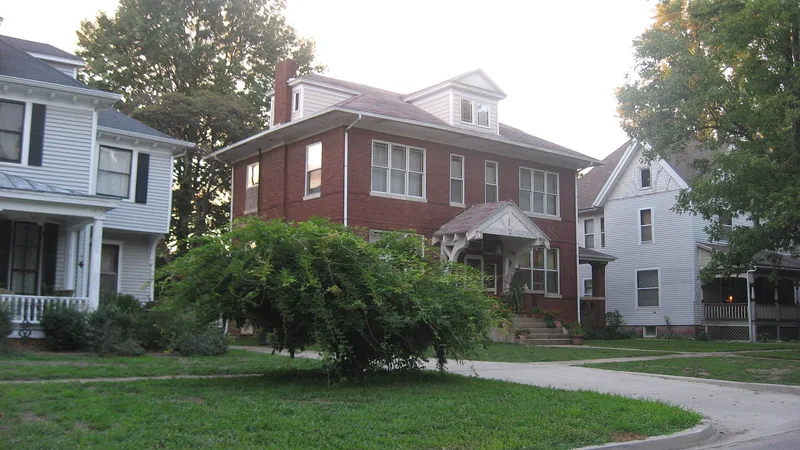
South Elliott Street in Olney, Illinois, is a five-block residential district of 33 main structures, most of them single-family houses, along with St. Joseph Church and Convent, St. Joseph Rectory and St. Alban's Episcopal Church. The street was platted by William Elliott after the Ohio and Mississippi Railroad opened in 1855, and Olney's prominent families moved there. It became known locally as the "Silk Stocking District." Early residents included Judge Aaron Shaw, attorney and horsebreeder Henry Sands, merchant John H. Gunn, and the Kurtz family of Red Top Seed. Architecture ranges from Italianate and Queen Anne houses to Georgian Revival residences built in the early twentieth century. Maple trees line the street, and the original brick paving from about 1880 remains beneath asphalt. A 1979 railroad viaduct divides the district into two sections. Two later houses, built in 1969 and about 1950, are classed as intrusions. The district was recognized for its largely intact historic character and local importance.
Machine-generated summary. This summary was generated by a language model from the official nomination document and has not been reviewed line by line by an editor. It may contain errors. Check the source document before relying on any detail. Source: nomination document (PDF) · catalog entry. Generated October 2026 (model claude-sonnet-5-5, prompt v1.0-2026-10-29).
| Period of significance | 1800-1899, 1900- |
|---|---|
| Styles | Italianate, Gothic Revival, Queen Anne and Georgian Revival, plus vernacular masonry and frame houses |
| Areas of significance | Architecture, Social History |
| Boundary source | NPS cultural-resource GIS polygon |
| Full listing page | Elliott Street Historic District (property record) |
What listing means for this property
This is a historic district. Buildings within its boundary are either contributing (they add to the district's significance) or non-contributing. Owners of contributing income-producing buildings can claim the 20% federal rehabilitation tax credit; homeowners should look at state credits. National Register districts impose no design review by themselves; a local historic district ordinance, if one exists, does (the difference explained).
General information, not legal or tax advice. Rules change; confirm with your State Historic Preservation Office or a qualified adviser.