Du Quoin State Fairgrounds

Why it's listed
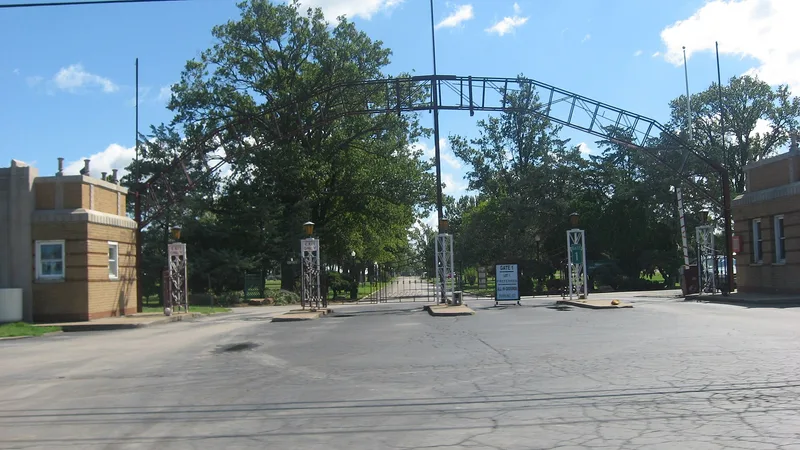
Du Quoin State Fairgrounds occupies the south edge of Du Quoin in southern Illinois. The nominated district covers the main section of a roughly 1,450-acre site and contains 21 contributing buildings, 3 contributing sites and several later noncontributing structures. William R. Hayes, a businessman with a strong interest in horse racing, founded the fair in 1923. Its original half-mile track was the main feature when it opened. A major building campaign followed in the 1940s, producing a monumental brick grandstand from 1947, an Exhibition Hall, ticket and concession buildings, gate houses and horse barns. Most of these buildings use Art Deco or Art Moderne detailing, including glass block windows, limestone trim and urns. The fairgrounds is significant for its long role as a popular state-level entertainment venue, for its place in harness racing history, including hosting the Hambletonian from 1957 to 1980, and for the cohesive collection of Art Deco buildings that remain in their original locations.
Machine-generated summary. This summary was generated by a language model from the official nomination document and has not been reviewed line by line by an editor. It may contain errors. Check the source document before relying on any detail. Source: nomination document (PDF) · catalog entry. Generated October 2026 (model claude-sonnet-5-5, prompt v1.0-2026-10-29).
| Period of significance | 1923-1948 |
|---|---|
| Styles | Art Deco, Moderne |
| Areas of significance | Entertainment/Recreation, Architecture |
| Acreage | 179 |
| Boundary source | NPS cultural-resource GIS polygon |
| Full listing page | Du Quoin State Fairgrounds (property record) |
What listing means for this property
This is a historic district. Buildings within its boundary are either contributing (they add to the district's significance) or non-contributing. Owners of contributing income-producing buildings can claim the 20% federal rehabilitation tax credit; homeowners should look at state credits. National Register districts impose no design review by themselves; a local historic district ordinance, if one exists, does (the difference explained).
General information, not legal or tax advice. Rules change; confirm with your State Historic Preservation Office or a qualified adviser.