Dixon Downtown Historic District

Why it's listed
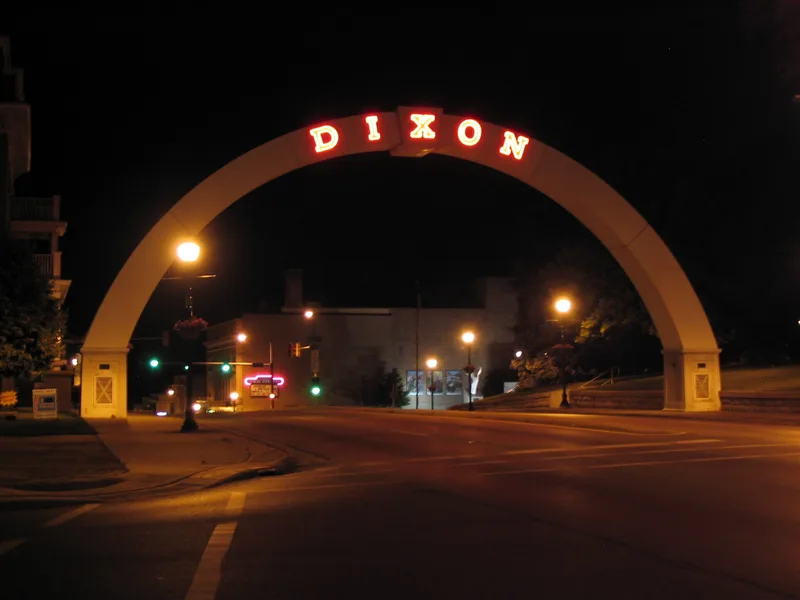
Dixon's downtown historic district occupies about 53 acres along the Rock River in north-central Illinois, roughly one hundred miles west of Chicago. It includes 154 properties on seventeen blocks, built between 1853 and 1961. About half are attached commercial buildings from the 1850s to the 1940s. The core sits between the Galena Avenue and Peoria Avenue bridges, with industrial uses to the east and west, including a 1920s hydroelectric plant at the dam, and homes at the western edge. South of the commercial blocks are civic and religious buildings, among them the 1900 Beaux Arts county courthouse, a 1908 post office and the 1853 Nachusa House. The city grew from a ferry crossing on the route to the Galena lead mines, and the district records its rise as a commercial center for northern Illinois. Of its resources, 108 contribute to its character, while 46 were built later or altered too much to contribute.
Machine-generated summary. This summary was generated by a language model from the official nomination document and has not been reviewed line by line by an editor. It may contain errors. Check the source document before relying on any detail. Source: nomination document (PDF) · catalog entry. Generated October 2026 (model claude-sonnet-5-5, prompt v1.0-2026-10-29).
| Period of significance | 1853-1961 |
|---|---|
| Styles | Late 19th/Early 20th Century Commercial Style; Late Victorian (Italianate, Romanesque); Late 19th/Early 20th Century Revival styles; Modern Movement (International Style) |
| Areas of significance | Commerce, Architecture |
| Boundary source | NPS cultural-resource GIS polygon |
| Full listing page | Dixon Downtown Historic District (property record) |
What listing means for this property
This is a historic district. Buildings within its boundary are either contributing (they add to the district's significance) or non-contributing. Owners of contributing income-producing buildings can claim the 20% federal rehabilitation tax credit; homeowners should look at state credits. National Register districts impose no design review by themselves; a local historic district ordinance, if one exists, does (the difference explained).
General information, not legal or tax advice. Rules change; confirm with your State Historic Preservation Office or a qualified adviser.