Des Plaines Methodist Camp Ground

Why it's listed
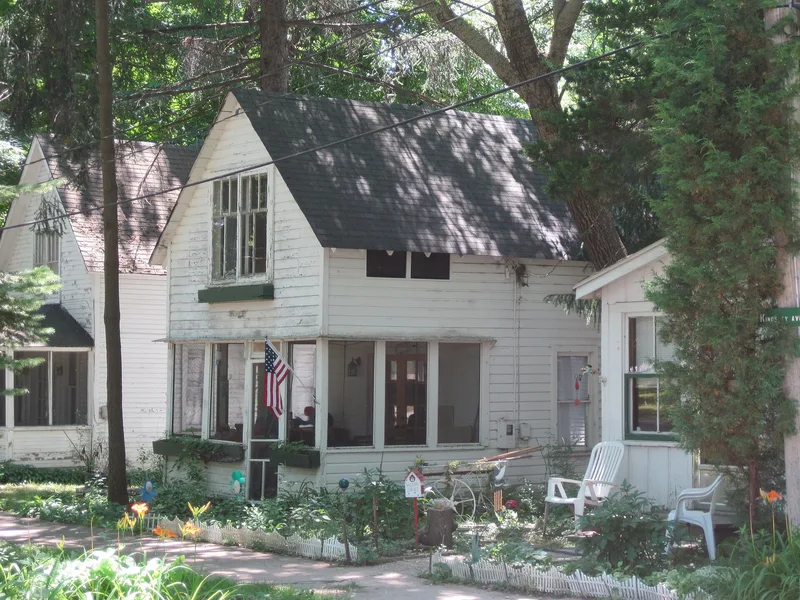
Des Plaines Methodist Camp Ground is a thirty-five acre village in the woods on the eastern edge of Des Plaines, Illinois, about twenty miles northwest of downtown Chicago. Tabernacles, cottages and public buildings line narrow sidewalks and streets arranged around a central circle, where the Waldorf Tabernacle serves as the spiritual heart. Wesley Tabernacle, in the southern part, was used by Swedish-speaking members. Most of the 121 contributing buildings are white-painted, 1-1/2 story wood-frame cottages with gable roofs, built between 1865 and the 1920s using balloon-frame construction. They were built quickly and cheaply to house families or church groups during week-long summer meetings. The first Des Plaines camp meeting took place in 1860 near the Chicago & Northwestern Railroad, which helped bring thousands of attendees. The site was moved and laid out in its present form in 1865 and has been used every summer since. Its plan and cottage type reflect the Methodist camp meeting tradition.
Machine-generated summary. This summary was generated by a language model from the official nomination document and has not been reviewed line by line by an editor. It may contain errors. Check the source document before relying on any detail. Source: nomination document (PDF) · catalog entry. Generated October 2026 (model claude-sonnet-5-5, prompt v1.0-2026-10-29).
| Styles | Late Victorian; Other: Camp Meeting Cottages |
|---|---|
| Areas of significance | Architecture |
| Acreage | 35 |
| Boundary source | NPS cultural-resource GIS polygon |
| Full listing page | Des Plaines Methodist Camp Ground (property record) |
What listing means for this property
This is a historic district. Buildings within its boundary are either contributing (they add to the district's significance) or non-contributing. Owners of contributing income-producing buildings can claim the 20% federal rehabilitation tax credit; homeowners should look at state credits. National Register districts impose no design review by themselves; a local historic district ordinance, if one exists, does (the difference explained).
General information, not legal or tax advice. Rules change; confirm with your State Historic Preservation Office or a qualified adviser.