Decatur Historic District

Why it's listed
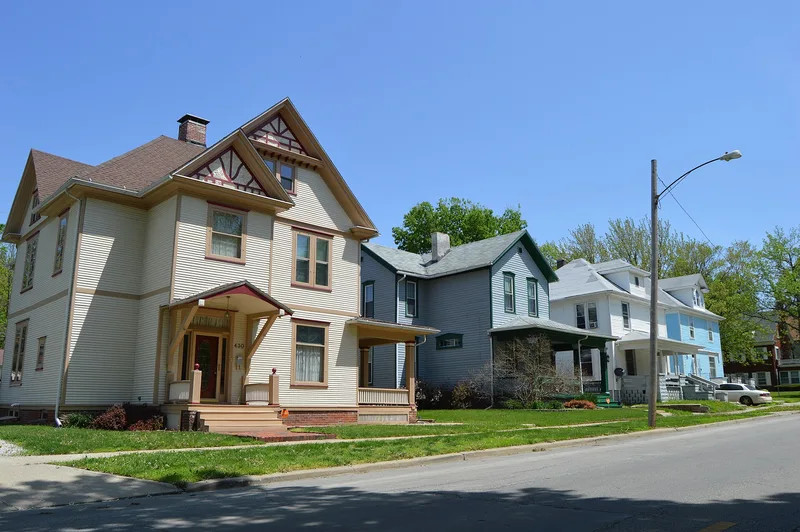
This residential district on Decatur's near west and southwest sides covers about 258 acres between Eldorado, Church, Haworth and the Sangamon River. Of 722 structures, 95 were judged especially significant, and most of the rest date from 1890 to 1929. Nearly every architectural style popular in Illinois between the Civil War and the Great Depression appears, from Italianate and Gothic Revival to Queen Anne, Classical Revival, Romanesque and Tudor Revival. Three houses on Millikin Place were designed by Frank Lloyd Wright and his associates. Many architects from Decatur, Chicago and elsewhere worked here between about 1880 and 1929. The district grew alongside Decatur's industries after the railroads arrived in 1854, and several houses belonged to manufacturers and civic leaders such as James Millikin and Adolph Mueller. Parking lots and small apartment buildings intrude in places, especially in the northeast, but the quality and intact character of the remaining buildings supported listing as an architectural district.
Machine-generated summary. This summary was generated by a language model from the official nomination document and has not been reviewed line by line by an editor. It may contain errors. Check the source document before relying on any detail. Source: nomination document (PDF) · catalog entry. Generated October 2026 (model claude-sonnet-5-5, prompt v1.0-2026-10-29).
| Period of significance | 1800-1899, 1900- |
|---|---|
| Styles | Mixed: Italianate, Second Empire, Gothic Revival, Queen Anne, Classical Revival, Romanesque, Tudor Revival, and early modern (Wright-related) |
| Areas of significance | Architecture |
| Acreage | 258 |
| Boundary source | NPS cultural-resource GIS polygon |
| Full listing page | Decatur Historic District (property record) |
What listing means for this property
This is a historic district. Buildings within its boundary are either contributing (they add to the district's significance) or non-contributing. Owners of contributing income-producing buildings can claim the 20% federal rehabilitation tax credit; homeowners should look at state credits. National Register districts impose no design review by themselves; a local historic district ordinance, if one exists, does (the difference explained).
General information, not legal or tax advice. Rules change; confirm with your State Historic Preservation Office or a qualified adviser.