Chicago Avenue Water Tower and Pumping Station

Why it's listed
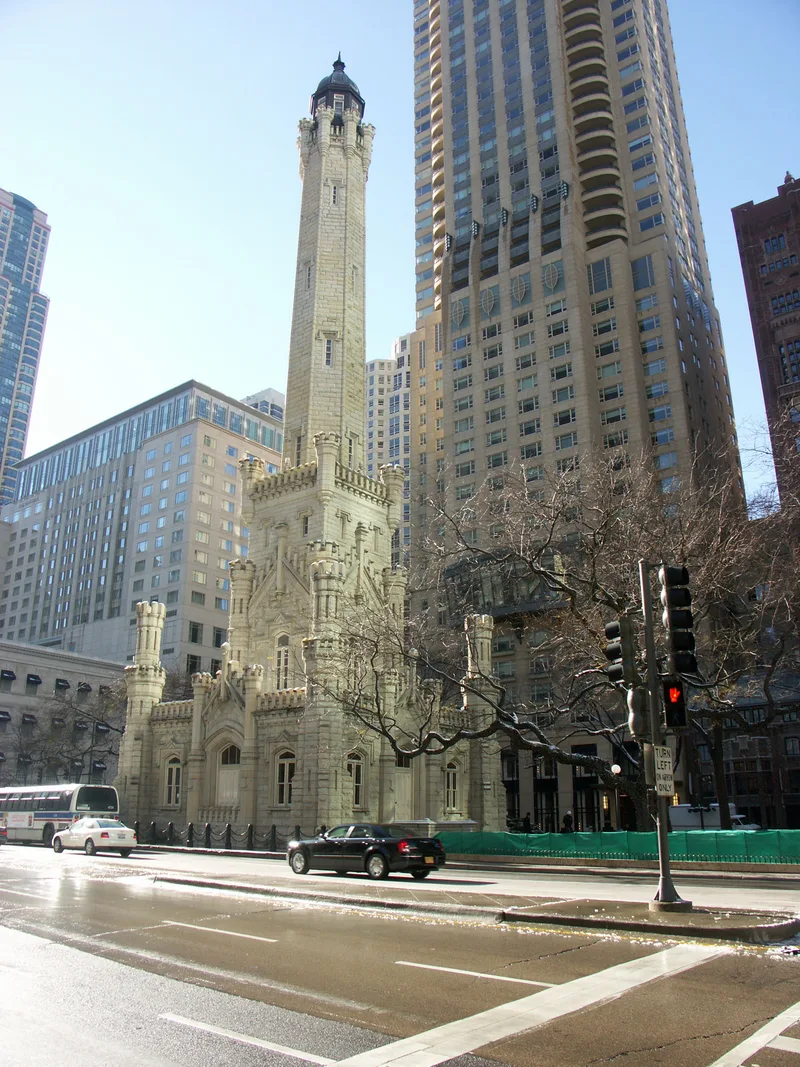
Two rough-faced Joliet limestone buildings on North Michigan Avenue in Chicago, a water tower and a pumping station, were designed by William W. Boyington in the castellated Gothic style and built from 1866-67, with completion in 1869. The tower rises in five sections, from a 40-foot-square base to an octagonal shaft with turrets and battlements. It was built to house a standpipe that evened out pressure from the pumping engines. The station is the land end of a two-mile tunnel under Lake Michigan, designed under city engineer Ellis Chesbrough, which brought clean water to the city and drew worldwide attention. The exteriors survived the 1871 fire, though the station interior was gutted and water service stopped for eight days. They were the only structures in the central city to survive, and are valued as a link to pre-fire Chicago and as an example of 19th-century engineering. The station still serves a large part of the city.
Machine-generated summary. This summary was generated by a language model from the official nomination document and has not been reviewed line by line by an editor. It may contain errors. Check the source document before relying on any detail. Source: nomination document (PDF) · catalog entry. Generated October 2026 (model claude-sonnet-5-5, prompt v1.0-2026-10-29).
| Period of significance | 19th Century (completed 1869) |
|---|---|
| Styles | Castellated Gothic; Gothic Revival elements |
| Areas of significance | Engineering, Architecture |
| Acreage | 2 |
| Boundary source | NPS cultural-resource GIS polygon |
| Full listing page | Chicago Avenue Water Tower and Pumping Station (property record) |
What listing means for this property
This is a historic district. Buildings within its boundary are either contributing (they add to the district's significance) or non-contributing. Owners of contributing income-producing buildings can claim the 20% federal rehabilitation tax credit; homeowners should look at state credits. National Register districts impose no design review by themselves; a local historic district ordinance, if one exists, does (the difference explained).
General information, not legal or tax advice. Rules change; confirm with your State Historic Preservation Office or a qualified adviser.