Cermak Road Bridge Historic District

Why it's listed
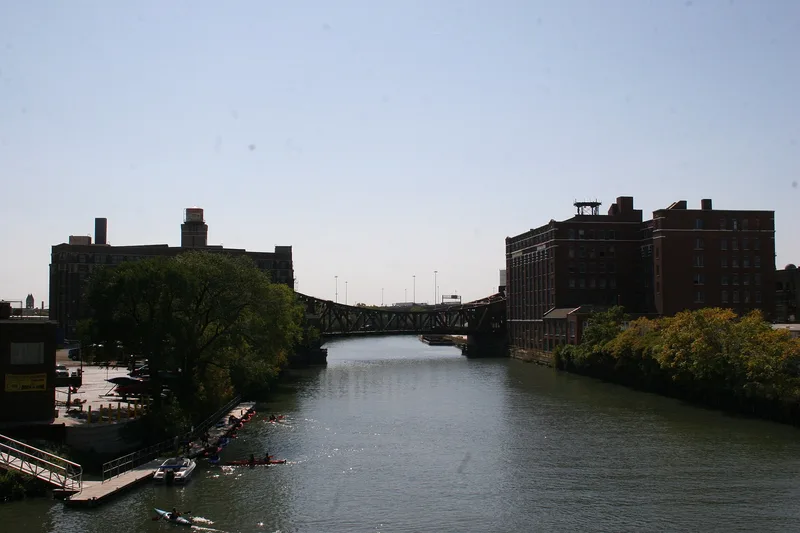
Along Cermak Road where it crosses the South Branch of the Chicago River, a cluster of brick industrial buildings and a steel bridge survives from the city's riverfront manufacturing era. The district covers 11.5 acres and includes four buildings from 1901 to about 1924 and the 1906 Cermak Road Bridge. The buildings are a warehouse for Wendnagel & Company, the Western Shade Cloth Company Building, the Thomson & Taylor Spice Company Building and the W.M. Hoyt Company Building. They range from three to seven stories and are built close to the lot lines, with Prairie School and Late Gothic Revival detailing on some. The bridge is a double-leaf Scherzer rolling lift span and the last of its kind in Chicago. It was rehabilitated in 1998 and raised 2.5 feet. The district is described as the city's only remaining ensemble of this type, with buildings and bridge that retain their original appearance and good integrity.
Machine-generated summary. This summary was generated by a language model from the official nomination document and has not been reviewed line by line by an editor. It may contain errors. Check the source document before relying on any detail. Source: nomination document (PDF) · catalog entry. Generated October 2026 (model claude-sonnet-5-5, prompt v1.0-2026-10-29).
| Styles | Chicago; Prairie School; Late Gothic Revival; Scherzer Rolling Lift Bridge |
|---|---|
| Areas of significance | Architecture, Engineering |
| Acreage | 11.5 |
| Boundary source | NPS cultural-resource GIS polygon |
| Full listing page | Cermak Road Bridge Historic District (property record) |
What listing means for this property
This is a historic district. Buildings within its boundary are either contributing (they add to the district's significance) or non-contributing. Owners of contributing income-producing buildings can claim the 20% federal rehabilitation tax credit; homeowners should look at state credits. National Register districts impose no design review by themselves; a local historic district ordinance, if one exists, does (the difference explained).
General information, not legal or tax advice. Rules change; confirm with your State Historic Preservation Office or a qualified adviser.