Central Springfield Historic District (Boundary Increase)

Why it's listed
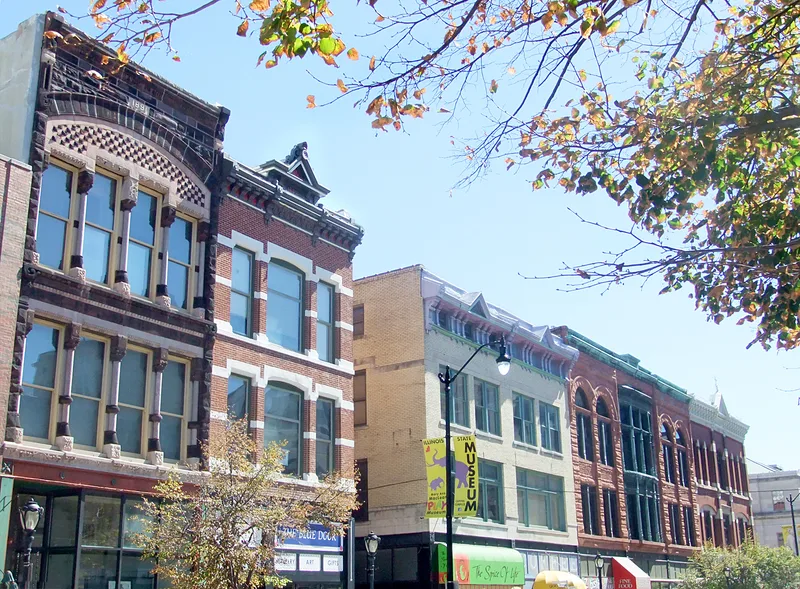
Seven masonry commercial buildings along the 300 block of South Sixth Street in downtown Springfield, Illinois, were added to the Central Springfield Historic District as a boundary extension. They range from two to nine stories and date from about 1885 to 1929. The anchor is the Leland Hotel of 1911, an eight-story, U-shaped brick building designed by Chicago firm Holabird & Roche. It served as a lodging and political hub, including as Adlai Stevenson's 1952 presidential campaign headquarters. Across the street, the 1929 Illinois State Journal Building, by Helmle & Helmle, has an Art Deco facade and a decorated plaster lobby. The 1906 Ferguson Building, designed by Samuel J. Hanes, was an early Springfield skyscraper; its original design remains under modern metal sheathing, so it is counted as non-contributing. The remaining buildings are modest two-story commercial structures. Together they mark the last southeastern growth of the downtown business zone before commercial development shifted to the city's edges.
Machine-generated summary. This summary was generated by a language model from the official nomination document and has not been reviewed line by line by an editor. It may contain errors. Check the source document before relying on any detail. Source: nomination document (PDF) · catalog entry. Generated October 2026 (model claude-sonnet-5-5, prompt v1.0-2026-10-29).
| Period of significance | 1822-1936 |
|---|---|
| Styles | Classical commercial (Leland Hotel, 321 S. Sixth); Art Deco (State Journal Building); early skyscraper with Sullivan-like design (Ferguson Building) |
| Areas of significance | Commerce, Architecture |
| Acreage | 4 |
| Boundary source | NPS cultural-resource GIS polygon |
| Full listing page | Central Springfield Historic District (Boundary Increase) (property record) |
What listing means for this property
This is a historic district. Buildings within its boundary are either contributing (they add to the district's significance) or non-contributing. Owners of contributing income-producing buildings can claim the 20% federal rehabilitation tax credit; homeowners should look at state credits. National Register districts impose no design review by themselves; a local historic district ordinance, if one exists, does (the difference explained).
General information, not legal or tax advice. Rules change; confirm with your State Historic Preservation Office or a qualified adviser.