Castlewood Terrace

The National Park Service has not published a boundary polygon for this district; the map shows the listed properties inside it and the district's reference point.
Why it's listed
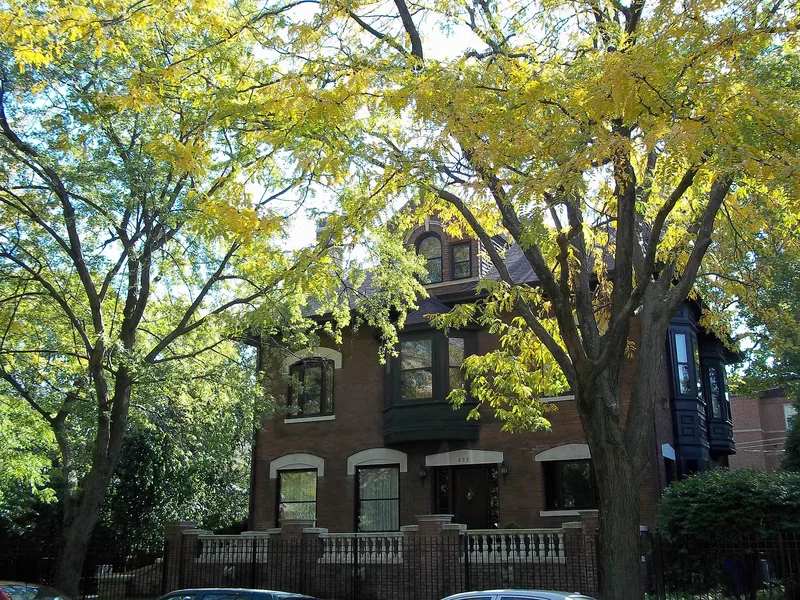
Castlewood Terrace is a single block in Chicago's Uptown neighborhood, running east from Sheridan Road toward Lake Michigan and Marine Drive. Its historic core holds 26 brick houses built between 1897 and 1927, along with garages and coach houses at the rear. The lots are at least 50 feet wide and 114 feet deep, there are no alleys, and a 25-foot building line has largely been kept. The houses draw on Queen Anne, Colonial and Classical revival, Tudor, Prairie and bungalow ideas, yet share brick construction and a similar scale. Architects included John Arthur Rogers, John S. Woollacott, Walter E. Perry, Robert C. Berlin and Lyman J. Allison. The block stayed single-family while the surrounding area filled with apartment buildings and commercial development. It was listed as a district because of this cohesive streetscape, with later alterations such as enclosed porches and replaced windows judged minor. Seven houses from 1988 at the east end are outside the district.
Machine-generated summary. This summary was generated by a language model from the official nomination document and has not been reviewed line by line by an editor. It may contain errors. Check the source document before relying on any detail. Source: nomination document (PDF) · catalog entry. Generated October 2026 (model claude-sonnet-5-5, prompt v1.0-2026-10-29).
| Styles | Late 19th & Early 20th Century Revivals and American Movements: Colonial, Classical and Tudor revivals; Prairie, Bungalow |
|---|---|
| Areas of significance | Architecture, Community Planning and Development |
| Acreage | 8 |
| Boundary source | not published |
| Full listing page | Castlewood Terrace (property record) |
What listing means for this property
This is a historic district. Buildings within its boundary are either contributing (they add to the district's significance) or non-contributing. Owners of contributing income-producing buildings can claim the 20% federal rehabilitation tax credit; homeowners should look at state credits. National Register districts impose no design review by themselves; a local historic district ordinance, if one exists, does (the difference explained).
General information, not legal or tax advice. Rules change; confirm with your State Historic Preservation Office or a qualified adviser.