Calumet Park

Why it's listed
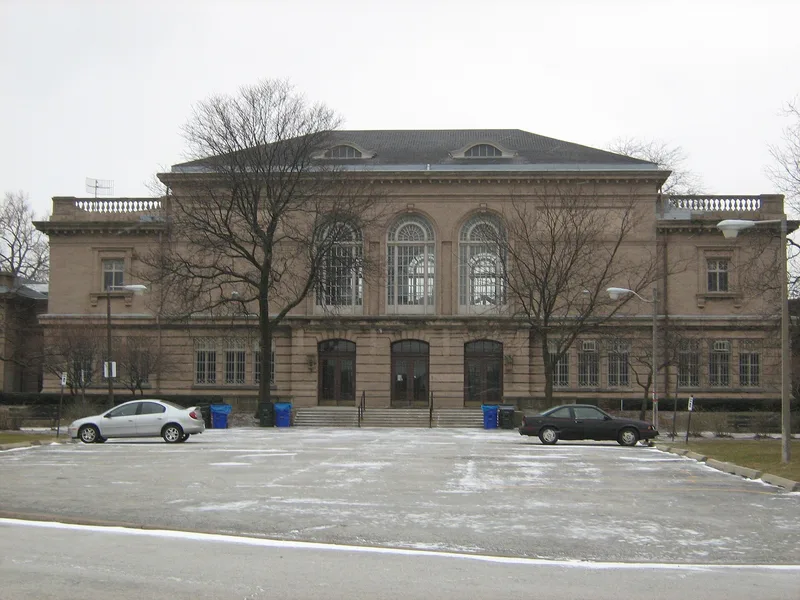
Calumet Park is a 199-acre public park on Chicago's far Southeast Side, running along Lake Michigan from East 95th Street to the Illinois-Indiana line. Planned in 1903 as Park No. 11 in a system of 14 parks, it was delayed while the South Park Commissioners built out a much larger site with slag and other landfill during the 1920s and 1930s. The park's in-house 1921 plan favored a naturalistic landscape of winding drives, tree-edged play fields and a bathing beach. Its most formal element is the classically styled field house of exposed aggregate concrete, with a central pavilion and two gymnasium wings. Sculptor Frederick C. Hibbard made two bas-relief panels of playing children for the facade, and murals from the late 1920s, two by Tom Lea, decorate the auditorium. Depression-era work added a brick comfort station and a maintenance yard. The park counts nine contributing and seven noncontributing resources and keeps strong integrity as a large green space on the south lakefront.
Machine-generated summary. This summary was generated by a language model from the official nomination document and has not been reviewed line by line by an editor. It may contain errors. Check the source document before relying on any detail. Source: nomination document (PDF) · catalog entry. Generated October 2026 (model claude-sonnet-5-5, prompt v1.0-2026-10-29).
| Styles | Beaux Arts Classicism |
|---|---|
| Areas of significance | Entertainment/Recreation, Social History, Architecture |
| Acreage | 199 |
| Boundary source | NPS cultural-resource GIS polygon |
| Full listing page | Calumet Park (property record) |
What listing means for this property
This is a historic district. Buildings within its boundary are either contributing (they add to the district's significance) or non-contributing. Owners of contributing income-producing buildings can claim the 20% federal rehabilitation tax credit; homeowners should look at state credits. National Register districts impose no design review by themselves; a local historic district ordinance, if one exists, does (the difference explained).
General information, not legal or tax advice. Rules change; confirm with your State Historic Preservation Office or a qualified adviser.