Broadway Historic District

Why it's listed
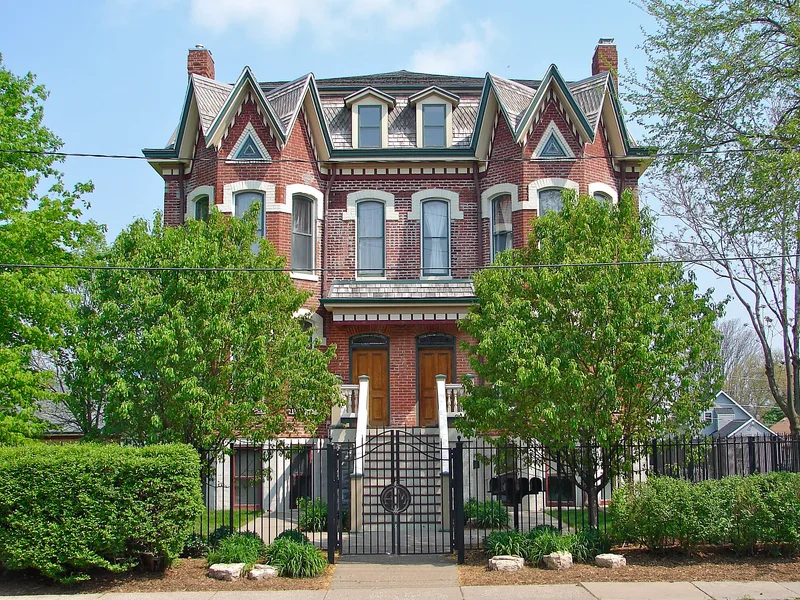
Broadway Historic District is a dense residential neighborhood south and east of downtown Rock Island, Illinois, close to the Mississippi River. Of its 865 buildings and outbuildings, 715 contribute to its historic character. Construction dates run from about 1854 to 1948. Most buildings are single-family houses, along with historic double houses, two-flats, eight apartment buildings, more than 180 garages and twelve carriage barns. Queen Anne houses dominate, many showing Colonial Revival influence, alongside Greek Revival, Italianate, Craftsman, Romanesque Revival and other styles. Four churches, the 1893 Old Lincoln School and a few small storefronts add variety. Most buildings are frame with clapboard siding, though brick, stone and rock-faced concrete block also appear. Mature trees, limestone or concrete curbs, retaining walls and the circular Lincoln Court give the area a distinct character. Alterations such as synthetic siding and enclosed porches are mostly reversible, and an ongoing effort to restore original siding has helped the district keep its integrity.
Machine-generated summary. This summary was generated by a language model from the official nomination document and has not been reviewed line by line by an editor. It may contain errors. Check the source document before relying on any detail. Source: nomination document (PDF) · catalog entry. Generated October 2026 (model claude-sonnet-5-5, prompt v1.0-2026-10-29).
| Styles | Queen Anne, Colonial Revival, Italianate (also Greek Revival, Romanesque Revival, French Second Empire, Classical Revival, International) |
|---|---|
| Areas of significance | Architecture |
| Acreage | 168 |
| Boundary source | NPS cultural-resource GIS polygon |
| Full listing page | Broadway Historic District (property record) |
What listing means for this property
This is a historic district. Buildings within its boundary are either contributing (they add to the district's significance) or non-contributing. Owners of contributing income-producing buildings can claim the 20% federal rehabilitation tax credit; homeowners should look at state credits. National Register districts impose no design review by themselves; a local historic district ordinance, if one exists, does (the difference explained).
General information, not legal or tax advice. Rules change; confirm with your State Historic Preservation Office or a qualified adviser.