Bloomington Central Business District

Why it's listed
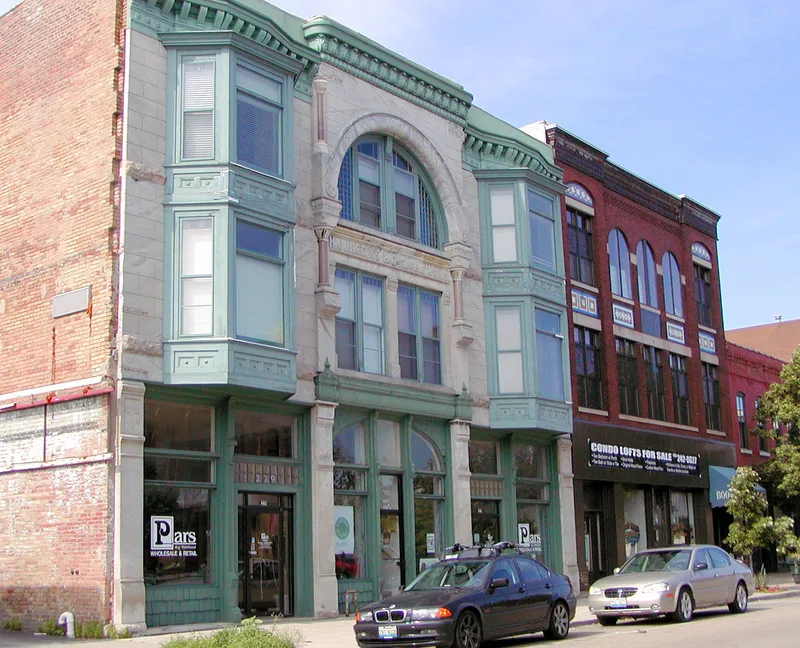
Bloomington's central business district covers roughly twelve square blocks around the McLean County courthouse square, laid out on a street grid platted in 1831. About 125 commercial buildings from 1842 to 1942 survive, most of them three- to four-story masonry structures sharing common walls on narrow lots. Ground floors have been repeatedly updated, while upper floors keep much of their nineteenth-century fabric. The district reflects the town's growth after two railroads arrived in 1853, a fire-district ordinance that made brick the standard building material, rebuilding after fires in 1856 and 1901, and the arrival of automobile-related buildings in the early twentieth century. Main Street, East Front Street and an outer ring of transportation buildings remain visible in their original relation to the square. The area was also a stage for political figures including Abraham Lincoln, Adlai Stevenson I, William Jennings Bryan, Theodore Roosevelt and Woodrow Wilson. Its value rests on the whole ensemble rather than on any single building.
Machine-generated summary. This summary was generated by a language model from the official nomination document and has not been reviewed line by line by an editor. It may contain errors. Check the source document before relying on any detail. Source: nomination document (PDF) · catalog entry. Generated October 2026 (model claude-sonnet-5-5, prompt v1.0-2026-10-29).
| Period of significance | 1842-1942 |
|---|---|
| Areas of significance | Industry, Community Planning and Development, Commerce, Exploration/Settlement, Politics/Government, Architecture |
| Acreage | 34 |
| Boundary source | NPS cultural-resource GIS polygon |
| Full listing page | Bloomington Central Business District (property record) |
What listing means for this property
This is a historic district. Buildings within its boundary are either contributing (they add to the district's significance) or non-contributing. Owners of contributing income-producing buildings can claim the 20% federal rehabilitation tax credit; homeowners should look at state credits. National Register districts impose no design review by themselves; a local historic district ordinance, if one exists, does (the difference explained).
General information, not legal or tax advice. Rules change; confirm with your State Historic Preservation Office or a qualified adviser.