Best Brewing Company of Chicago Building

The National Park Service has not published a boundary polygon for this district; the map shows the listed properties inside it and the district's reference point.
Why it's listed
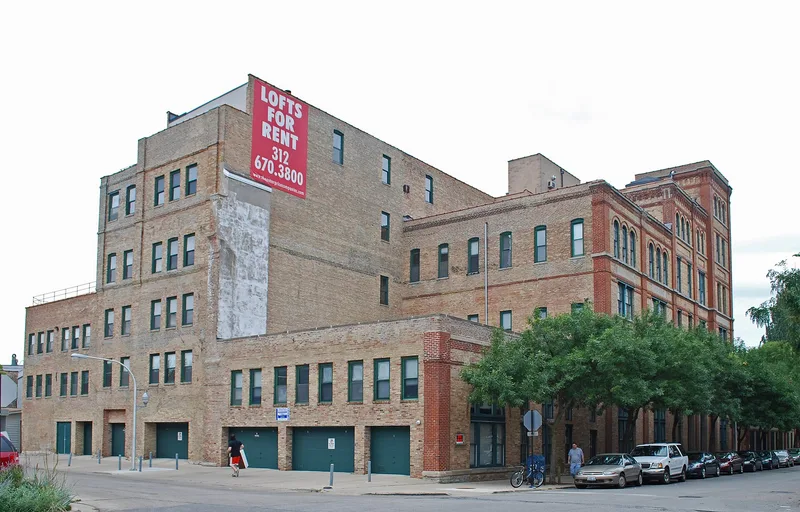
Best Brewery is a cluster of nine rectangular masonry buildings on Chicago's North Side, built in 1893 after an earlier brewery was torn down. Oscar Beyer of Milwaukee was the architect. The principal buildings are a six-story Brew House with a seven-story grain tower, a Machine House and a Boiler House, all of pale common brick with red face brick pilasters, limestone belt courses and Romanesque arched top-floor windows. A smaller office building from about 1885 was kept. The Hasterlik brothers bought the business in 1891 and ran it for roughly seventy years. During Prohibition the company made root beer, ice and malt syrup to stay open. After repeal it pioneered store-brand beers for grocery chains and was among the first locally to sell beer in cans. Production stopped in 1961. Equipment has been removed inside and some openings closed, yet the brewery's form and details largely remain. It is the last brewery complex on the North Side.
Machine-generated summary. This summary was generated by a language model from the official nomination document and has not been reviewed line by line by an editor. It may contain errors. Check the source document before relying on any detail. Source: nomination document (PDF) · catalog entry. Generated October 2026 (model claude-sonnet-5-5, prompt v1.0-2026-10-29).
| Period of significance | 1891-1937 |
|---|---|
| Areas of significance | Industry, Architecture |
| Acreage | 0.3 |
| Boundary source | not published |
| Full listing page | Best Brewing Company of Chicago Building (property record) |
What listing means for this property
This is a historic district. Buildings within its boundary are either contributing (they add to the district's significance) or non-contributing. Owners of contributing income-producing buildings can claim the 20% federal rehabilitation tax credit; homeowners should look at state credits. National Register districts impose no design review by themselves; a local historic district ordinance, if one exists, does (the difference explained).
General information, not legal or tax advice. Rules change; confirm with your State Historic Preservation Office or a qualified adviser.