Belleville Historic District

Why it's listed
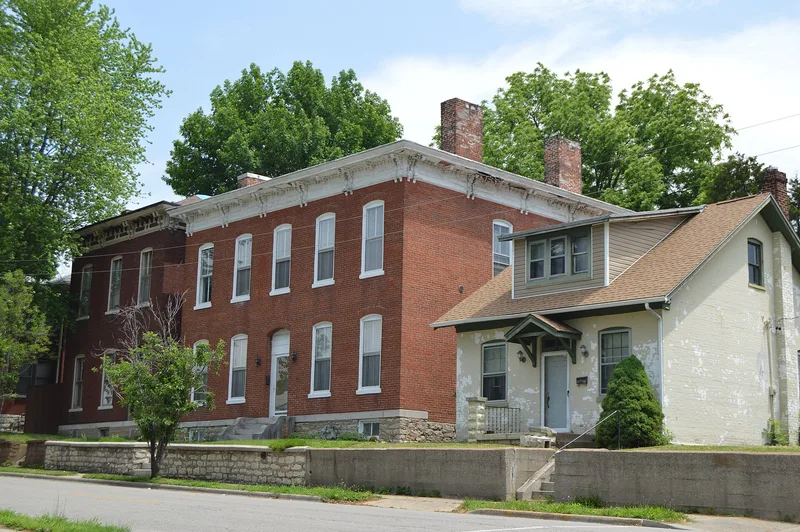
This 154-acre district covers much of Belleville's east side in St. Clair County, Illinois. It is dominated by 19th-century houses built of locally made red brick, most dating from about 1845 to 1875. The oldest documented house dates from 1830 and is in a simplified Greek Revival style. The district holds the heaviest concentration of a small one- to 1½-story masonry cottage type that the nomination describes as a local development, possibly shaped by German immigrants who arrived after 1830. Two-story Italianate brick houses form much of the background, with scattered Second Empire, Gothic Revival, late Federal and Queen Anne buildings. Belleville was platted in 1814 and became a major early center of German settlement, with an estimated 65 percent of residents of German birth or descent by 1870. Its economy long centered on coal, flour-milling, brewing and stove making. Some siding, parking lots and newer buildings weaken the streetscape, but the historic fabric remains largely intact.
Machine-generated summary. This summary was generated by a language model from the official nomination document and has not been reviewed line by line by an editor. It may contain errors. Check the source document before relying on any detail. Source: nomination document (PDF) · catalog entry. Generated October 2026 (model claude-sonnet-5-5, prompt v1.0-2026-10-29).
| Styles | Indigenous brick cottage type with Greek Revival, late Federal, Italianate, Second Empire, Gothic Revival and Queen Anne examples |
|---|---|
| Areas of significance | Architecture |
| Acreage | 154 |
| Boundary source | NPS cultural-resource GIS polygon |
| Full listing page | Belleville Historic District (property record) |
What listing means for this property
This is a historic district. Buildings within its boundary are either contributing (they add to the district's significance) or non-contributing. Owners of contributing income-producing buildings can claim the 20% federal rehabilitation tax credit; homeowners should look at state credits. National Register districts impose no design review by themselves; a local historic district ordinance, if one exists, does (the difference explained).
General information, not legal or tax advice. Rules change; confirm with your State Historic Preservation Office or a qualified adviser.