Barber-Colman Company Historic District

Why it's listed
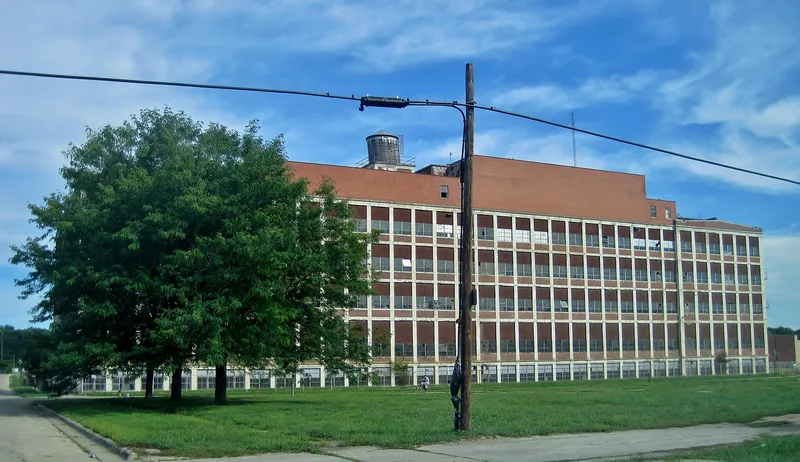
Barber-Colman Company's former manufacturing complex occupies about 12 acres on the west bank of the Rock River, south of downtown Rockford, Illinois. Fifteen brick and masonry structures, built between 1907 and 1948, remain from an original twenty industrial buildings and two gatehouses. Counted as eleven resources, they include mill-construction lofts, reinforced concrete and steel-frame lofts, truss-roofed factories, industrial garages, a powerhouse and two small gatehouses. The company numbered each building as a "Section" in order of construction, and several are joined by ground-floor connections or overhead walkways. Flat, bowed or sawtooth roofs and multi-light metal windows give the group a unified look. The company began in 1900 at Loomis and Rock streets and grew into a worldwide producer of textile machinery, machine tools, overhead doors, electrical controls and heating and air conditioning controls. Large vacant lots, once company parking, separate the complex from the neighborhood. The property is now vacant and fenced.
Machine-generated summary. This summary was generated by a language model from the official nomination document and has not been reviewed line by line by an editor. It may contain errors. Check the source document before relying on any detail. Source: nomination document (PDF) · catalog entry. Generated October 2026 (model claude-sonnet-5-5, prompt v1.0-2026-10-29).
| Styles | Other: Factory; Other: Industrial Loft |
|---|---|
| Areas of significance | Industry, Invention, Architecture, Engineering |
| Acreage | 12.8 |
| Boundary source | NPS cultural-resource GIS polygon |
| Full listing page | Barber-Colman Company Historic District (property record) |
What listing means for this property
This is a historic district. Buildings within its boundary are either contributing (they add to the district's significance) or non-contributing. Owners of contributing income-producing buildings can claim the 20% federal rehabilitation tax credit; homeowners should look at state credits. National Register districts impose no design review by themselves; a local historic district ordinance, if one exists, does (the difference explained).
Noted as vacant in the nomination. Nomination documents can be decades old; current status may differ. If you are considering buying an empty listed property, read the due-diligence checklist.
General information, not legal or tax advice. Rules change; confirm with your State Historic Preservation Office or a qualified adviser.