Alta Vista Terrace Historic District

Why it's listed
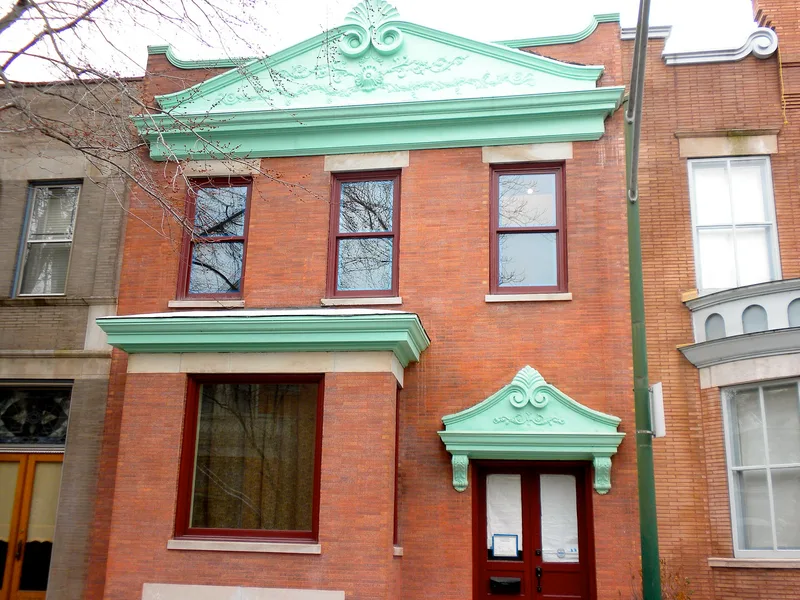
Alta Vista Terrace is a short, tree-shaded street in Chicago lined with forty narrow rowhouses, twenty on each side, each on a lot about 24 feet wide and 40 feet deep. Real estate developer Samuel Eberly Gross bought the block in 1900 after seeing London rowhouses, and he ran a street down the middle so no house would face the railroad or the alley. Eighteen two-story houses fill each row, with two three-story houses at the center. The brick facades come in twenty designs, repeated in reverse order on the opposite side, and draw on Classical Renaissance, late Gothic and Adam motifs such as pilasters, pediments, Palladian windows and leaded-glass fanlights. Some windows, awnings and gables have been altered, and one facade carries false half-timbering, yet the exteriors are little changed. The street was documented by the Historic American Buildings Survey as the Street of 40 Houses and is valued as a unified whole unlike any other in Chicago.
Machine-generated summary. This summary was generated by a language model from the official nomination document and has not been reviewed line by line by an editor. It may contain errors. Check the source document before relying on any detail. Source: nomination document (PDF) · catalog entry. Generated October 2026 (model claude-sonnet-5-5, prompt v1.0-2026-10-29).
| Period of significance | 20th Century (begun 1900) |
|---|---|
| Styles | Eclectic, with Classical Renaissance, late Gothic and Adam-style details |
| Areas of significance | Community Planning and Development, Landscape Architecture, Architecture |
| Acreage | 2.9 |
| Boundary source | NPS cultural-resource GIS polygon |
| Full listing page | Alta Vista Terrace Historic District (property record) |
What listing means for this property
This is a historic district. Buildings within its boundary are either contributing (they add to the district's significance) or non-contributing. Owners of contributing income-producing buildings can claim the 20% federal rehabilitation tax credit; homeowners should look at state credits. National Register districts impose no design review by themselves; a local historic district ordinance, if one exists, does (the difference explained).
General information, not legal or tax advice. Rules change; confirm with your State Historic Preservation Office or a qualified adviser.